
How to Search King County Warrants
Start by naming the court. District Court bench and failure-to-appear warrants are different from Superior Court felony warrants, and both differ from search warrants. The District Court e-Filing and Case Access portal can show warrant status in civil, infraction, and criminal cases, but case access needs a free account. Superior Court's KC Script has a dedicated Search Warrant search for records filed after November 11, 2018.
There is no countywide public list of every active arrest warrant. For a possible arrest or bench warrant, contact the issuing court or an attorney rather than relying on a third-party site. For a search warrant record, KC Script is the official tool. The reason there is no single list is that warrants attach to individual cases spread across many courts, including city municipal courts that run their own systems. A complete answer about one person can require checking more than one court.
- Decide whether the warrant is District Court, Superior Court, or a search warrant.
- For District Court status, log in to Case Access and search the case.
- For Superior Court search warrants, open the KC Script Search Warrant search.
- Search by name, organization, record number, or filing date.
- If a warrant exists, ask the court about a hearing, quash motion, bail, or surrender.
The official Superior Court search-warrant tool is the KC Script Search Warrant search.
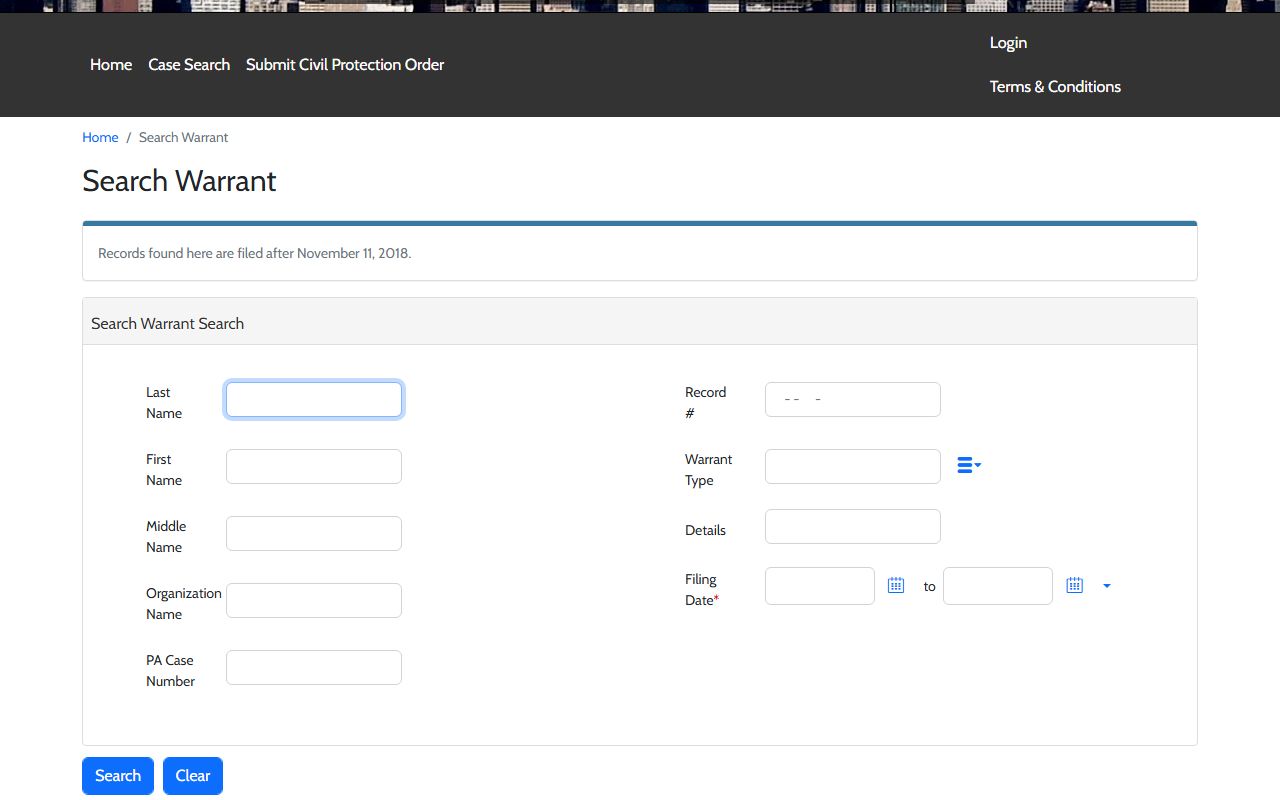
The page warns that only publicly available search warrants appear, and that sealed warrants must be requested in person.
District Court Status vs Superior Court Search Warrants
The two systems answer different questions. District Court tells you whether a warrant is attached to a misdemeanor, infraction, or civil case it handles. Superior Court's KC Script lets you search the text-style record of a filed search warrant. A felony arrest warrant usually ties to a Superior Court criminal case, so you may need to check the criminal case record as well.
District Court name searches require choosing Criminal and Infraction or Civil and adding a filing-date range when the exact date is unknown. KC Script search-warrant results are limited to filings after November 11, 2018, and a smaller filing-date range returns results faster.
One thing neither portal offers is a single, countywide list of every open arrest warrant. Warrants are tied to individual cases across many courts, including city municipal courts that run their own systems. That is why a clean result in one portal does not prove a person is warrant-free. A Seattle Municipal Court warrant, for example, would not appear in King County District Court at all. When the stakes are high, confirm directly with the court named on any notice, ticket, or summons.
King County Search Warrant Search Fields
The KC Script Search Warrant form offers name, organization, and record fields plus a warrant-type filter. The filing-date field is the key one, since the portal asks for a date range when you do not have a record number. The warrant-type options show how modern these records can be.
| Field Label | Type | Required | Notes / Format |
|---|---|---|---|
| Last / First / Middle Name | Text | No | Supports contains, starts with, and soundex |
| Organization Name | Text | No | For entity targets |
| PA Case Number | Text | No | Prosecuting Attorney case number if known |
| Record # | Text | No | Warrant record number |
| Warrant Type | Multiselect | No | Address, bank account, email, IP address, social media, telephone, vehicle, and more |
| Filing Date | Date range | Yes | Use a small range for faster results |
Search-warrant targets can include bank accounts, email addresses, IP addresses, social media, telephone numbers, and vehicles, not just people and places.
What a King County Search Warrant Record Shows
The public search-warrant record exposes a defined set of fields. No individual sealed warrant opens to the public, so the visible data comes from the search form and portal labels.
- Party or organization name connected to the warrant.
- PA case number and warrant record number.
- Warrant type, such as person, vehicle, or email address.
- Details field describing the target.
- Filing date of the warrant.
Sealed search warrants do not appear in the portal at all. To request one, an eligible person must go to a Clerk location in person.
Types of King County Warrants
Warrants are not all alike. Knowing the type tells you which office to call and what resolving it will involve.
- Arrest warrant - authorizes arrest based on probable cause or filed charges.
- Bench warrant - issued by a judge, often for a missed court date or noncompliance.
- Search warrant - authorizes a search or seizure and may be sealed during an investigation.
- Body attachment - a civil warrant arising in contempt or enforcement matters.
A protection-order violation can also generate a new criminal case and a warrant, depending on the facts.
Resolving a King County Bench Warrant
A warrant does not go away on its own. The safest path is to deal with it through the court, often with a lawyer. Acting quickly can keep a bench warrant from leading to an arrest at a traffic stop or other contact.
- Confirm which court issued the warrant.
- Contact that court or an attorney about the warrant.
- Ask whether a hearing, quash or recall motion, bail, or surrender is needed.
- If bail applies and the person is in custody, use the county's official pay-bail process.
- After resolution, confirm the warrant is recalled in the case and allow time for the portal to update.
Note: Do not rely on third-party warrant lists; only the issuing court can confirm whether a warrant is active or has been recalled.
Active Arrest Warrant vs Search Warrant
People often use the word warrant to mean two very different things. An active arrest or bench warrant is an order to take a person into custody. A search warrant is an order that lets police search a place, device, or account for evidence. The county handles them on separate tracks, and that shapes what you can find online.
Arrest and bench warrant status shows up inside a court case, so you check it through the case portal for the court that issued it. Search warrants have their own KC Script category and their own record numbers. A search warrant can be sealed while an investigation is open, which is why the public portal shows only unsealed search warrants filed after November 11, 2018. If you cannot find a search warrant that you believe exists, it may be sealed, and only an in-person request at a Clerk location can reach it.
Bail, Custody, and Surrender
When a warrant leads to custody, bail and the jail come into play. If a person is booked into a King County jail, the Subject Lookup Tool shows the facility and booking number, and the county runs an official pay-bail process. Family members should use only published county phone numbers, since scammers target people trying to post bail. Detention staff do not have court-case details, so a court date still has to be confirmed with the court.
Surrendering on a warrant is often handled through the court with a lawyer's help. A judge may quash or recall a bench warrant, set a new hearing, or set conditions of release. After a warrant is recalled, the case record should show the change, though the online portal can take a few days to update. For booking and facility detail, the inmate records page covers the roster, and the released inmates page covers custody after release.
King County Sex Offender Registration and Public Notification
Public-safety records overlap with warrants, and one of the most searched is the sex offender registry. Registration in Washington is a sheriff function. The King County Sheriff's Office says offenders register with the sheriff in their county of residence, and it publishes registration hours, ID and conviction requirements, and offender risk levels.
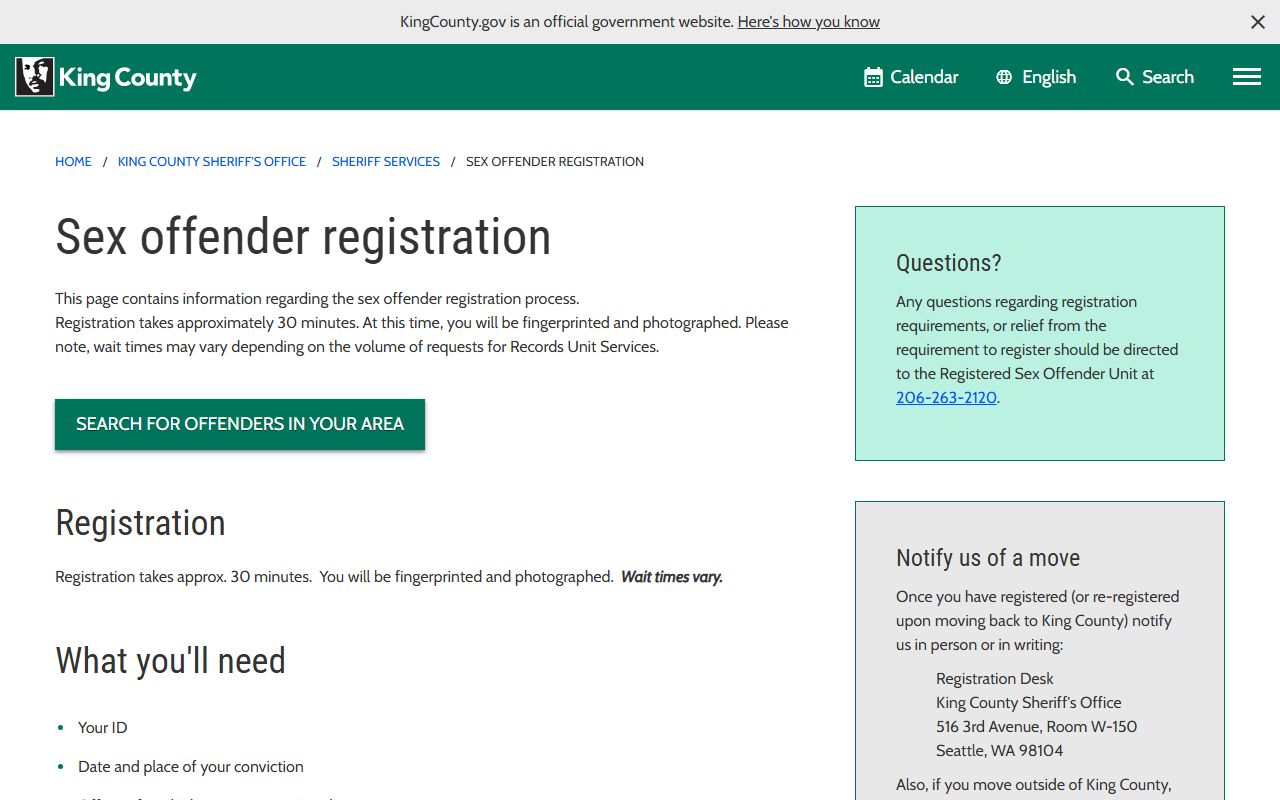
The King County sex offender registration page explains that Level 1 offenders are lower risk and not typically shown in the public search, while Level 2 and Level 3 reflect moderate and high risk. Public notification rests on a state statute.
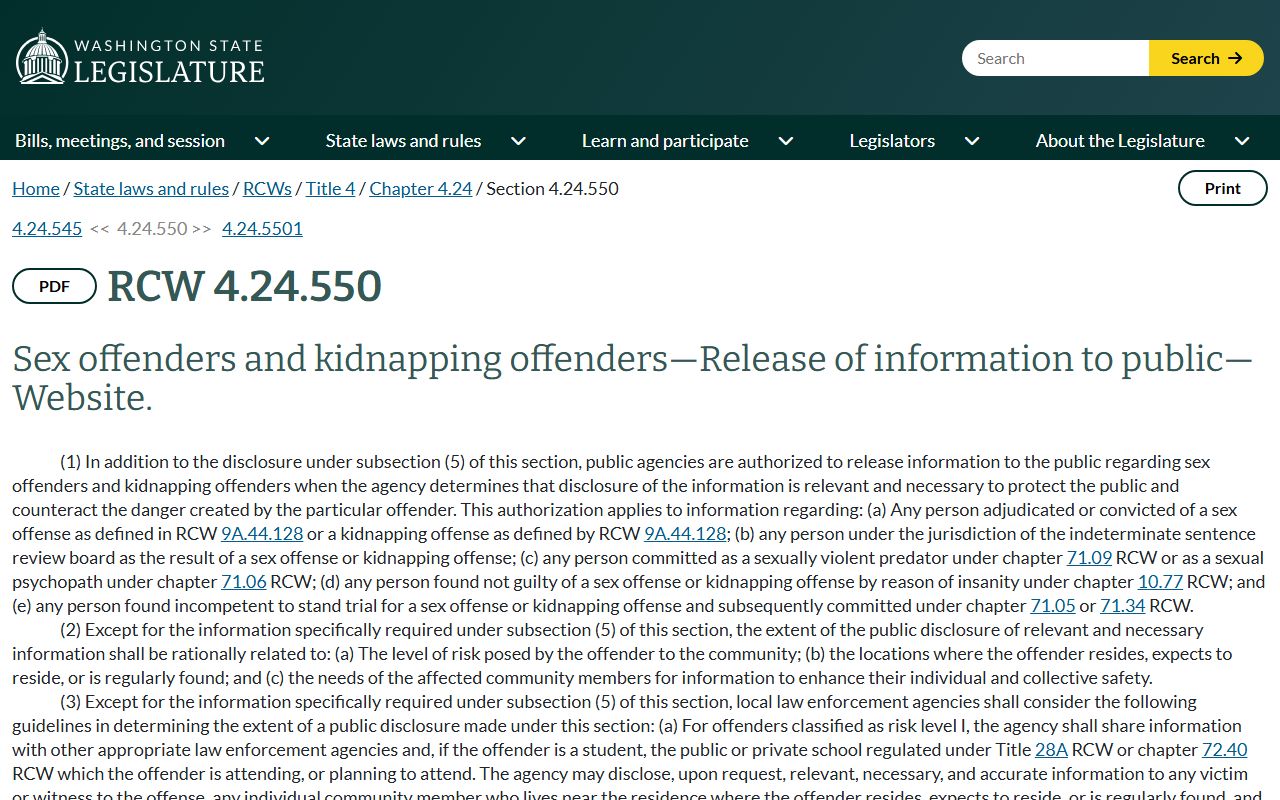
That law is RCW 4.24.550, which controls public release of sex offender information and underlies the statewide registry. The statewide search itself runs through a partner site.
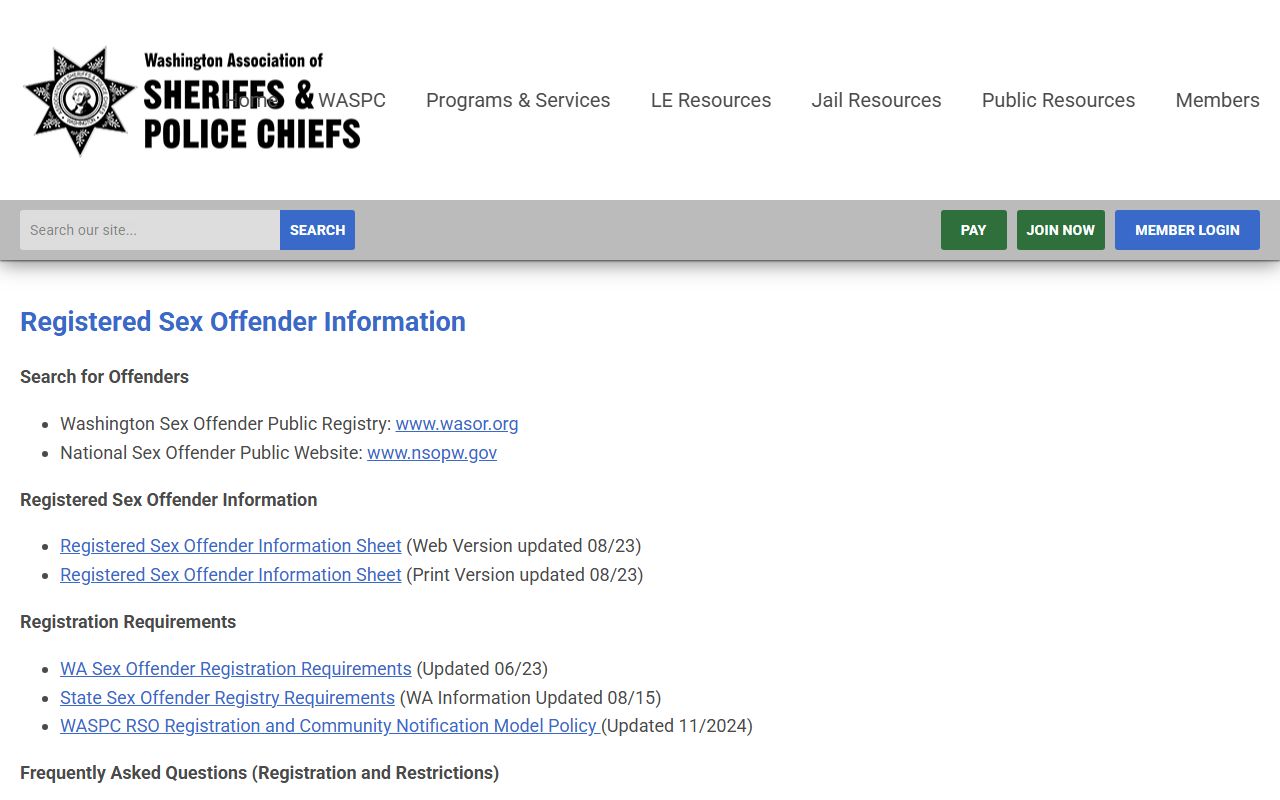
The WASPC sex offender information page describes the statewide registry and links the public search. The sheriff handles questions about any level assigned by another agency.
Avoiding King County Warrant Scams
Scam callers often claim you have a warrant or missed court and demand immediate payment. The Prosecuting Attorney's Office and District Court both warn about callers posing as law enforcement or sheriff deputies. A real court does not collect a warrant fine by prepaid card or gift card over the phone. If you get such a call, hang up and call the court using a number published on a King County website.
To check a real warrant, use the court portals or contact the court. For custody questions tied to a warrant, see the inmate records page, and for the underlying criminal case, see arrest records and court records.