
How to Find Recently Released King County Inmates
Start with the county jail tool. The DAJD Subject Lookup Tool finds people who have been in custody at King County jails within the past year, not just those held now. It carries a Currently In Custody filter with Yes and No options, and setting it to No is the closest official path to a recent release. Search by name, booking number, or unique control number, then read the result to confirm the person left custody.
The tool does not give a release date or a release address. For immediate confirmation, the adult jail phone line is faster than waiting for the portal to settle.
King County DAJD Jail Line
Adult custody verification
Seattle and Kent jails
Adults 206-296-1234
Youth 206-263-9595
For the full roster fields and facility detail, the inmate records page covers the lookup tool in depth.
Why is there no single release list? Custody in the region is split across many systems. A person booked into a King County jail may be released outright, transferred to state prison, handed to federal custody, or moved to another county. Each of those systems keeps its own records, so a complete release history sometimes means checking several tools in turn. The county jail lookup is the right first step for a recent local release, but it is not the last step when a person has moved between systems.
Setting Up Release Notifications
If you want to know the moment custody status changes, register for alerts instead of checking by hand. VINELink is the victim and public notification service used across many states and agencies. You choose Washington or the agency where available, search by name or offender number, and register for phone, email, or text alerts. Notifications and the exact fields vary by state and agency.
| Field Label | Type | Required | Notes / Format |
|---|---|---|---|
| State / Agency | Dropdown or map | Yes | Choose Washington or the agency |
| Name | Text | No | Offender or person search |
| Offender ID / Booking | Text | No | If known |
| Register for Notification | Workflow | No | Phone, email, or text options vary |
You can register through VINELink, which provides custody-status alerts where the service is supported. Alerts are most useful when you cannot watch a case daily, such as a victim who wants notice before an offender is released. Registration is free, and you can set more than one contact method. Keep in mind that VINELink reports custody status and notification options, not court outcomes, so it works best alongside a court search rather than in place of one.
Searching State and Federal Released Inmates
People who leave a county jail sometimes go to state prison or federal custody, and each system has its own search. The Washington Department of Corrections runs an incarcerated search for people in state prison. The Bureau of Prisons runs a national locator for federal custody. Both show whether a person is in custody and, for the BOP, whether they have been released.
The Washington DOC search uses a short set of fields and returns a basic results table.
| Field Label | Type | Required | Notes / Format |
|---|---|---|---|
| First Name | Text | No | Only hyphens and apostrophes allowed |
| Last Name | Text | No | Same character rule |
| DOC Number | Text | No | Identifies the individual |
| Results | Table | n/a | DOC Number, Name, Age, Location, VINE link |
Try the Washington DOC incarcerated search if a person may have transferred to state prison. The basic results show the DOC number, name, age, location, and a notification link, with no mugshot, charge, or release date in the table. The federal locator uses more fields.
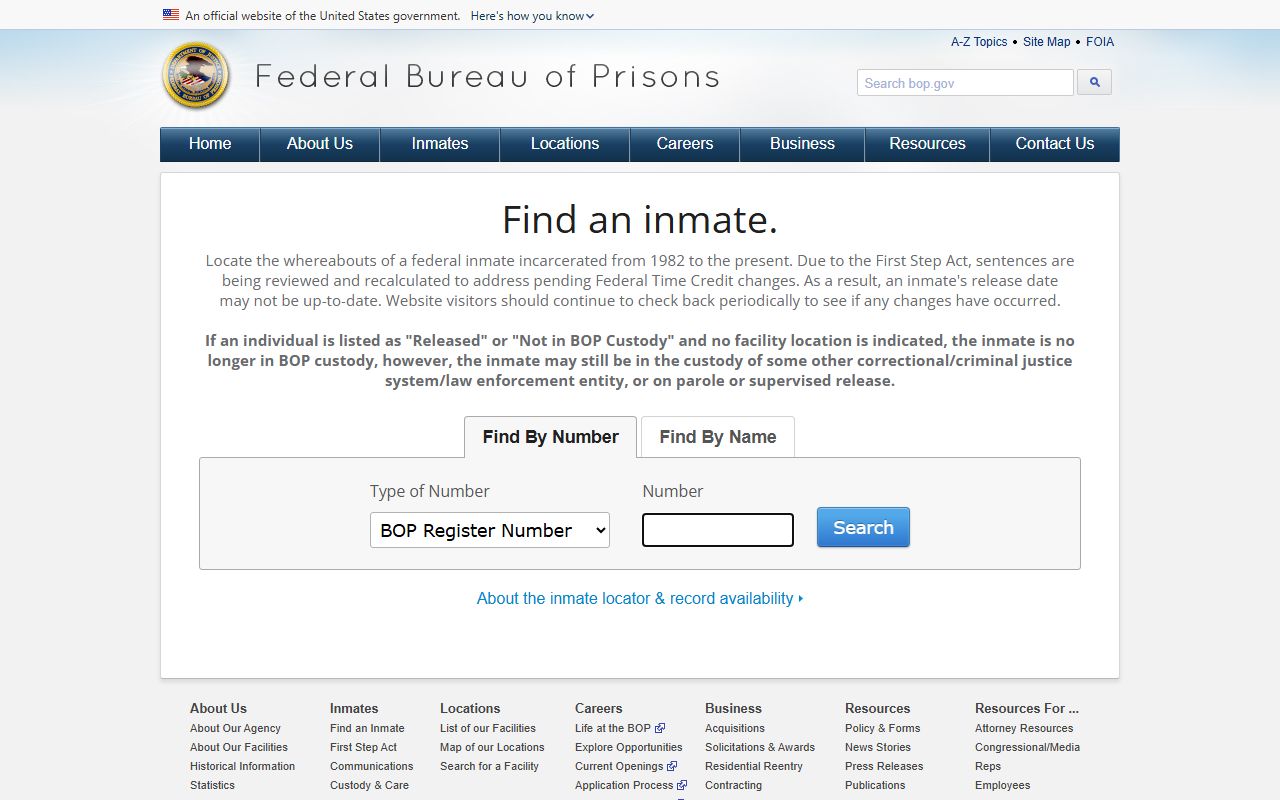
| Field Label | Type | Required | Notes / Format |
|---|---|---|---|
| Number Type | Dropdown | Conditional | BOP Register, DCDC, FBI, or INS number |
| Number | Text | Conditional | Used with the number type |
| First / Last Name | Text | Last name for name search | Optional first name |
| Race / Age / Sex | Dropdown | No | Optional filters |
The federal BOP inmate locator can show name, register number, age, race, sex, release date, and a status such as Released or Not in BOP Custody. A Released result does not mean the person is free of all supervision, since they may be on parole or in another custody system.
Federal Case Records After Release
Custody status is one thing, and the case behind it is another. Federal court records for people prosecuted in the region run through the national PACER system, which charges per page and requires registration. PACER is the official source for federal dockets and filings tied to the Western District of Washington.
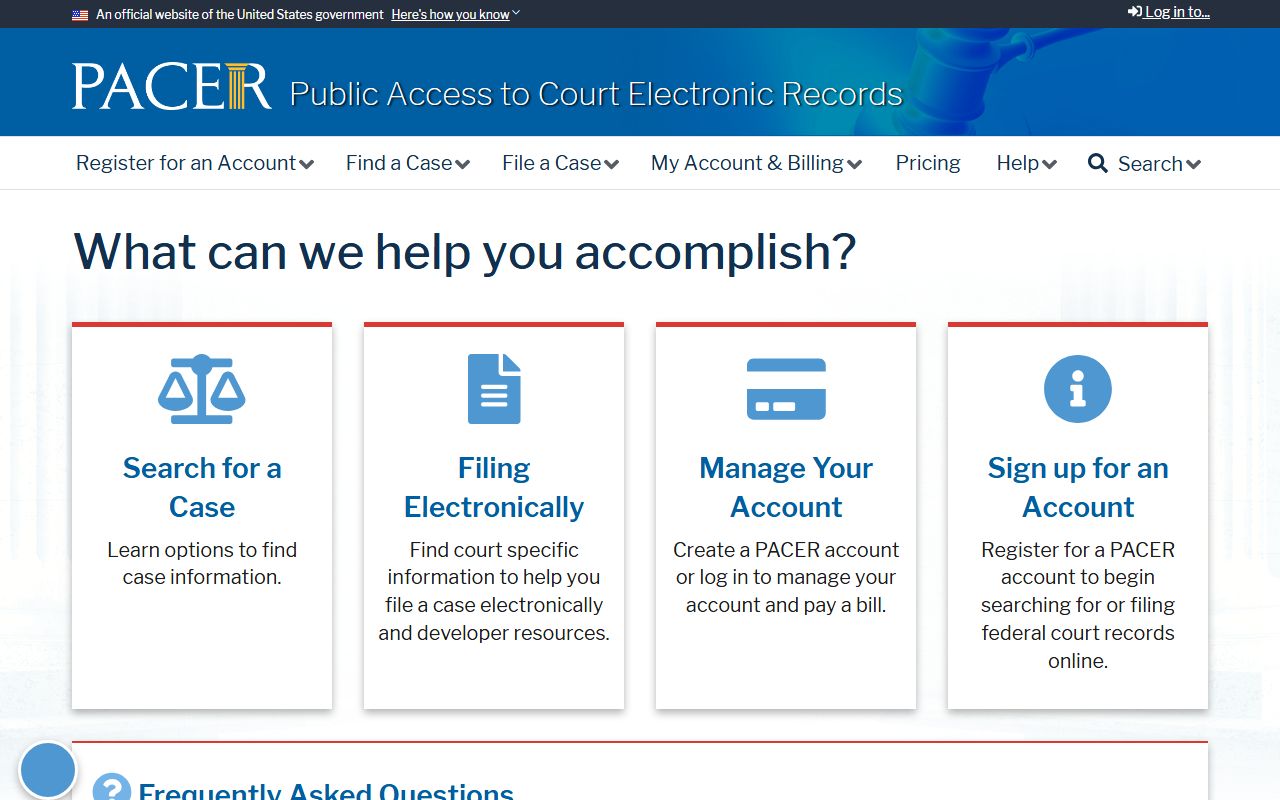
You can register and search through PACER, the federal court records service. A free alternative for many opinions and dockets is also available.
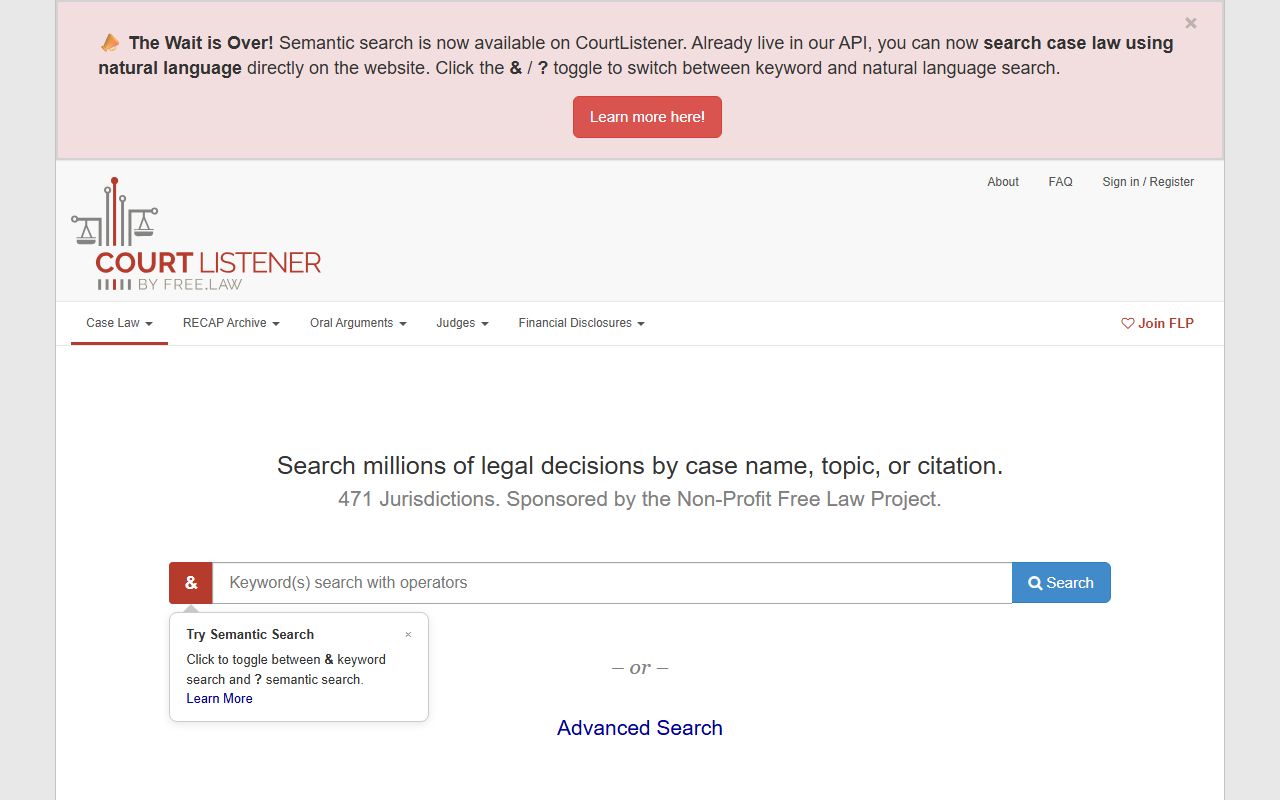
The CourtListener service hosts free federal opinions and many dockets, which can help when PACER fees are a barrier.
Verifying a Release in Person or by Phone
Online tools lag real events, so a phone call is sometimes the only way to confirm a release on the same day. For adults, call the King County jail line at 206-296-1234. For a youth under 18, call 206-263-9595, which runs 24 hours a day. Detention staff can confirm custody status, but they do not provide court dates or case outcomes.
The county does not publish a release door, a release-property procedure, or a transportation program in its public pages, so plan to ask those questions by phone before arrival. Release timing is hard to predict from outside the jail. Processing a release can take hours after a court orders it, and the public lookup may not flip to a custody status of No until that paperwork clears. If you are meeting someone on release, call ahead rather than relying on the online tool to time your arrival.
The Sex Offender Registry After Release
Some people who leave custody must register as sex offenders, and the public registry is searchable. Not every registrant is published. The King County Sheriff's Office explains that Level 1 offenders are lower risk and usually not shown, while Level 2 and Level 3 reflect moderate and high risk. The statewide public registry covers Level 2, Level 3, and certain transient or out-of-compliance Level 1 offenders.
| Field Label | Type | Required | Notes / Format |
|---|---|---|---|
| Name | Text | No | Search by offender name |
| Address / Location | Text or map | No | Geographic search |
| City / County / ZIP | Text or dropdown | No | Localizes the search |
| Radius | Dropdown | No | Distance from an address |
| Offender Details | Profile | n/a | Published profile for Level 2 and 3 and some Level 1 |
A typical published profile includes a name, photo, physical description, registered address or transient status, risk level, offense, jurisdiction, and compliance status. Public notification rests on RCW 4.24.550, and the search and registration process is covered on the warrant records page. The sheriff also notes that the offender level is set by the law enforcement agency where the person lives, so a level assigned in another county is not King County's call. If a registrant moves into the county, registration shifts to the King County Sheriff's Office, and the public search reflects the most current published data.
Parole and Probation Information
A release does not always end court supervision. A person may leave custody but remain on community supervision, probation, or parole conditions set by the court or the Department of Corrections. Those conditions can include reporting requirements, treatment, and restrictions on travel or contact. Supervision is tracked by the supervising agency, not the county jail tool.
If you need to know whether someone is under supervision, contact the supervising agency or the court that handled the case. The court records page explains how to pull a case file that may list conditions of sentence.
Supervision in Washington can take several forms. Community custody is the term the Department of Corrections uses for supervision after a prison term, and it comes with conditions tied to the original sentence. A District Court or Superior Court case can also carry probation conditions even when no prison time was served. Because the rules differ by case type and offense, the only reliable answer comes from the supervising agency or the case file itself, not from a custody-status search alone.
Reentry Resources in King County
People leaving custody often need legal help, housing, and benefits support. Several organizations serve King County residents at low or no cost. The Northwest Justice Project provides statewide civil legal aid for low-income residents, and Washington LawHelp offers self-help legal information across many topics.
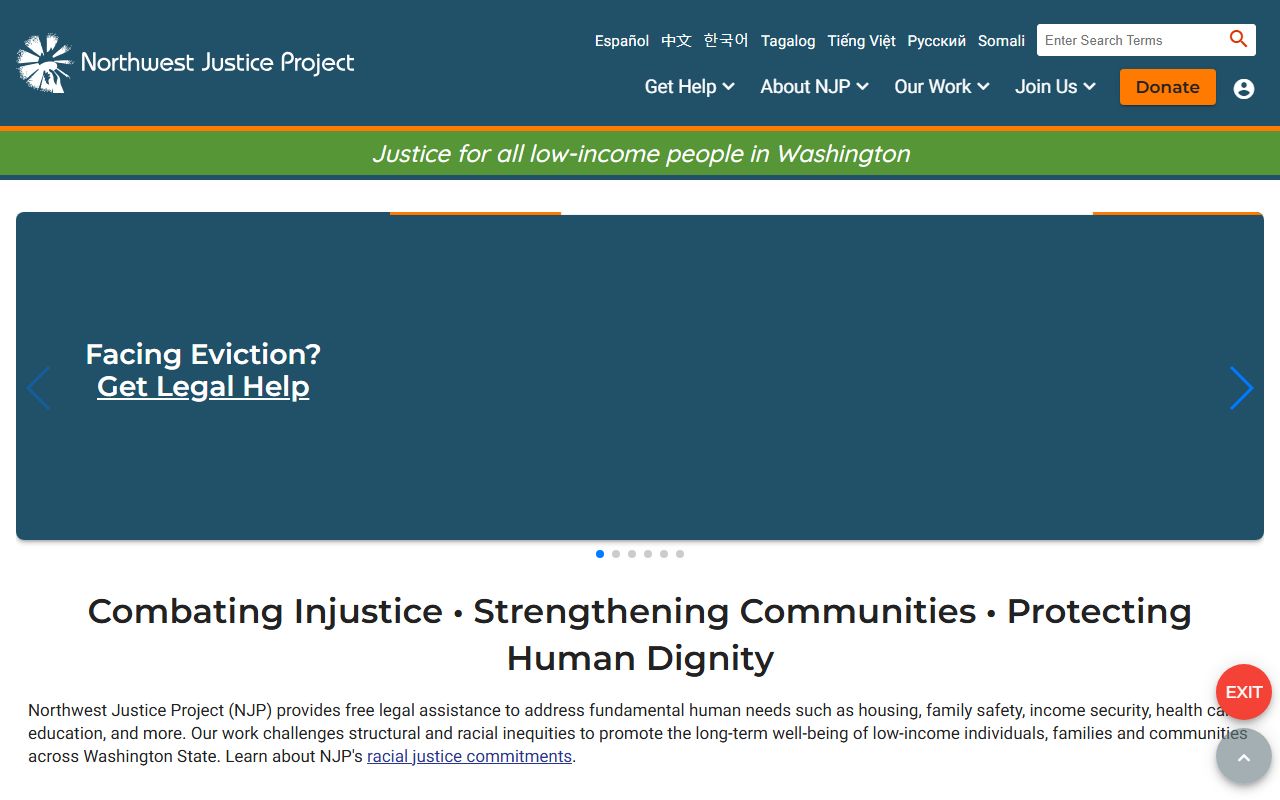
The Northwest Justice Project, shown above, runs civil legal aid and the CLEAR intake line. For do-it-yourself legal information, a partner portal is available.
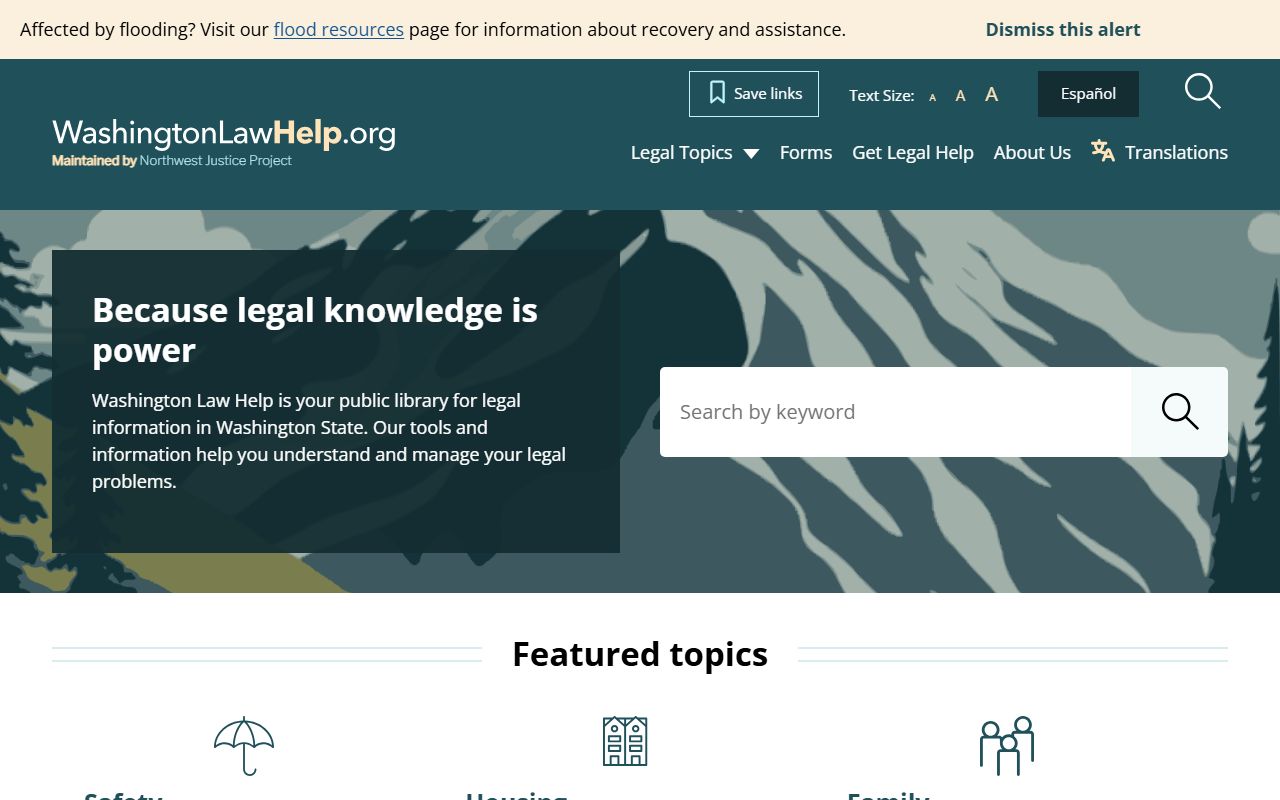
The Washington LawHelp site covers family law, housing, public benefits, sealing, and protection orders. The King County Bar Association also runs free clinics and referrals. The King County Department of Community and Human Services and local community resource centers connect people to housing and behavioral health support, and groups such as Goodwill offer job and training programs. Because program details and intake rules change, confirm current services directly with each organization before relying on them.
Rights and Records After Release
Civil rights after a conviction follow their own rules. Washington voting rights for people with felony convictions have changed in recent years, so confirm current status with the Washington Secretary of State or the Department of Corrections rather than assuming. Firearm rights are a separate court process and do not restore automatically on release.
Records relief is also possible. A qualifying conviction may be vacated under state law, which changes how it is reported. The arrest records page covers sealing and vacating in more detail.
Note: A release shown online may lag the real event, and supervision may continue, so confirm status and conditions with the supervising agency.