
Public Records Act vs Court Rules
Washington runs two access systems side by side. Agency records, such as a police report or a county contract, are governed by the Public Records Act in chapter 42.56 RCW. Court case files, such as a filed pleading or a docket, are governed by court rules, mainly GR 31. A request for a jail record or a county email follows the PRA, while a request for a divorce decree or a felony judgment follows the court process.
Mixing the two is the most common mistake. The PRA does not control filed court records, and the court process does not control agency emails. The simplest test is to ask who created the record and why. If it was filed in a case under a cause number, it is a court record. If a department made it in the course of its work, it is an agency record under the PRA. Getting that question right at the start is what sends a request to the office that can actually fill it.
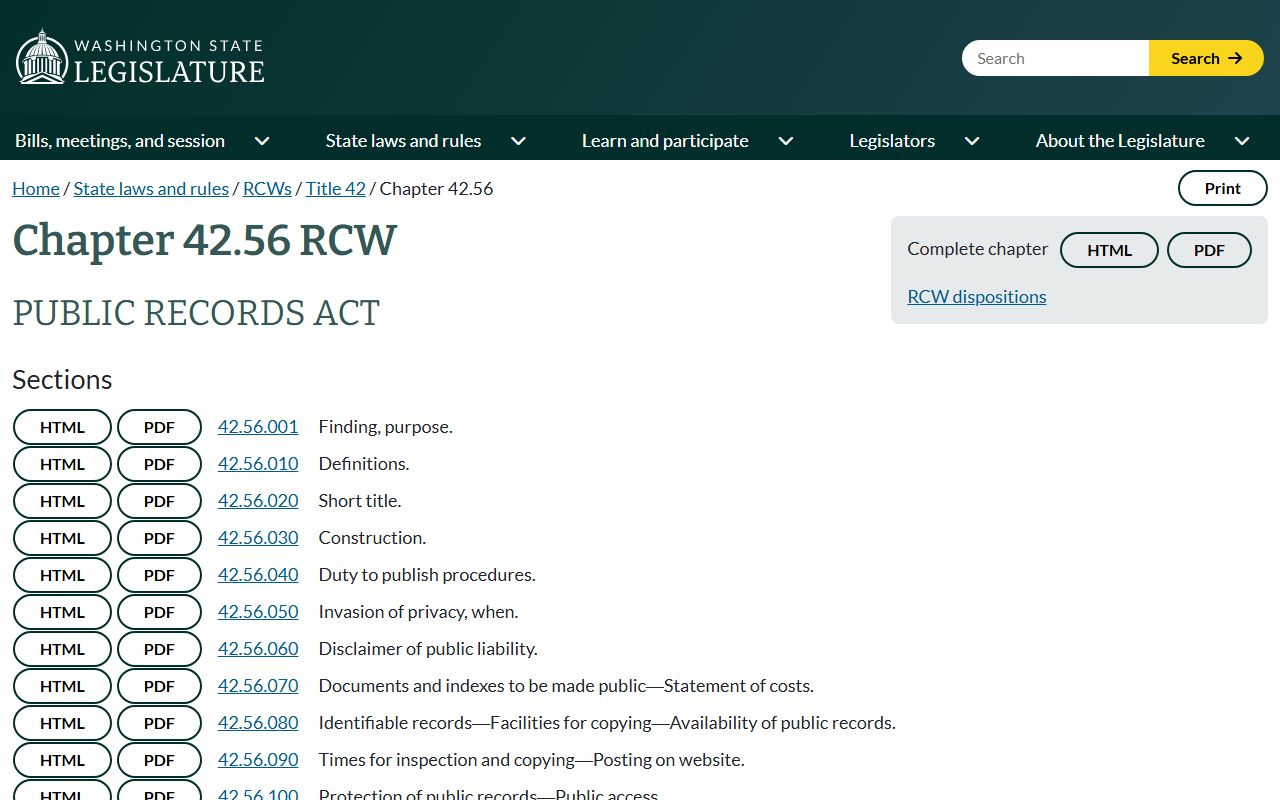
The full statute is chapter 42.56 RCW, the Washington Public Records Act.
King County Records Request Routing
The county routes requests by record type, and knowing the office saves days. Court case records go to the Superior Court Clerk or to District Court. Jail and detention data goes to the Department of Adult and Juvenile Detention. Recorded marriage and property documents go to the Recorder's Office. Agency administrative records, such as emails and contracts, go through the county's public-records request process.
- Superior Court case files - the Superior Court Clerk and KC Script.
- District Court case files - the District Court records process.
- Jail and booking data - the Department of Adult and Juvenile Detention.
- Marriage and recorded documents - the Recorder's Office.
- Agency emails and contracts - the county public-records request process.
If you are unsure, start with the record itself: who created it tells you who holds it.
How to File a King County Public Records Request
A public-records request does not need a special form or a stated reason. Under the PRA, an agency must make identifiable public records available, and a clear request gets a faster answer. Describe what you want as specifically as you can.
- Identify the office that holds the record.
- Describe the record clearly, with dates, names, or case numbers if known.
- Submit the request through that office's public-records process.
- Wait for the agency's response or a reasonable time estimate.
- Pay any allowed copy charges to receive the records.
The rule on identifiable records helps shape a good request.
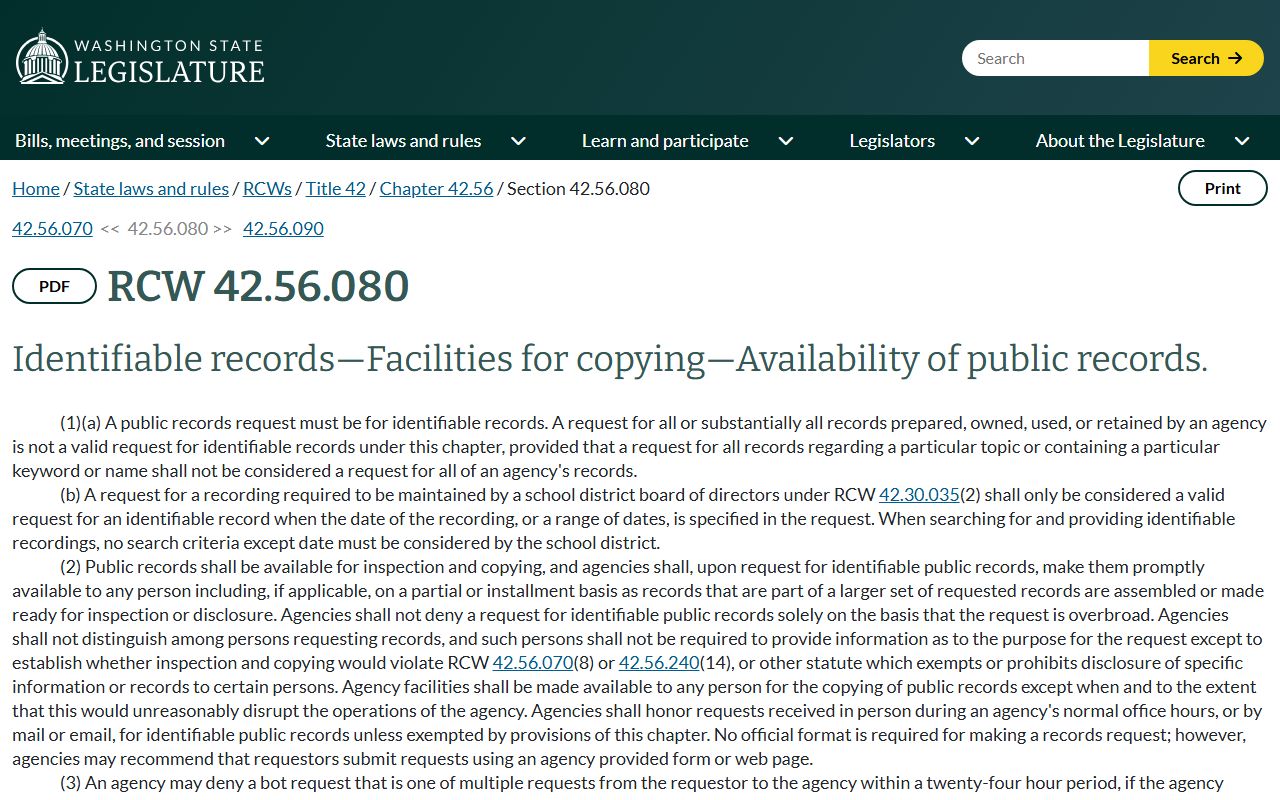
That rule is RCW 42.56.080, which governs identifiable records and how agencies make them available.
Court Records vs Agency Records in King County
The clearest way to route a request is to ask what kind of record it is. A court record is created in a case, under a cause number, and filed with a court. An agency record is created by a department doing its day-to-day work. The first follows court rules, and the second follows the Public Records Act. They live in different systems and reach different counters.
Some examples make the line concrete. A motion, a judgment, or a docket entry is a court record from the Clerk. A police incident report, a county budget document, a contract, or an internal email is an agency record under the PRA. A jail booking record sits with the detention department. A recorded deed sits with the Recorder. Sending a court-record request through the PRA process, or an agency-record request to the court, usually ends with the request being redirected, which costs days. Matching the record to its system first avoids that detour.
What a King County Records Request Includes
A request does not require a fixed template, but most requests share the same parts. The table shows the information that makes a request easy to fulfill.
| Field | Type | Required | Notes |
|---|---|---|---|
| Requester contact | Text | For response | Name and a way to reach you |
| Record description | Text | Yes | Be specific; dates and names help |
| Date range | Date range | No | Narrows large searches |
| Format preference | Choice | No | Electronic or paper copies |
| Reason | Text | No | Not required under the PRA |
For filed court records, the request instead follows the Clerk's process, covered on the court records page.
King County Public Records Fees
Fees differ by record type. PRA copy charges for agency records are set under statute, while court copy fees come from the Clerk's fee schedule. The table shows the common court copy charges; agency PRA charges follow the statutory method instead.
| Item | Amount |
|---|---|
| Court record online view or download per page | $0.25 |
| Clerk-assisted non-certified copy per page | $0.50 |
| Certified court copy | $5 first page, $1 each additional |
| Agency PRA copies | Set under RCW 42.56.120 |
The PRA copy-charge rules sit in a separate statute.
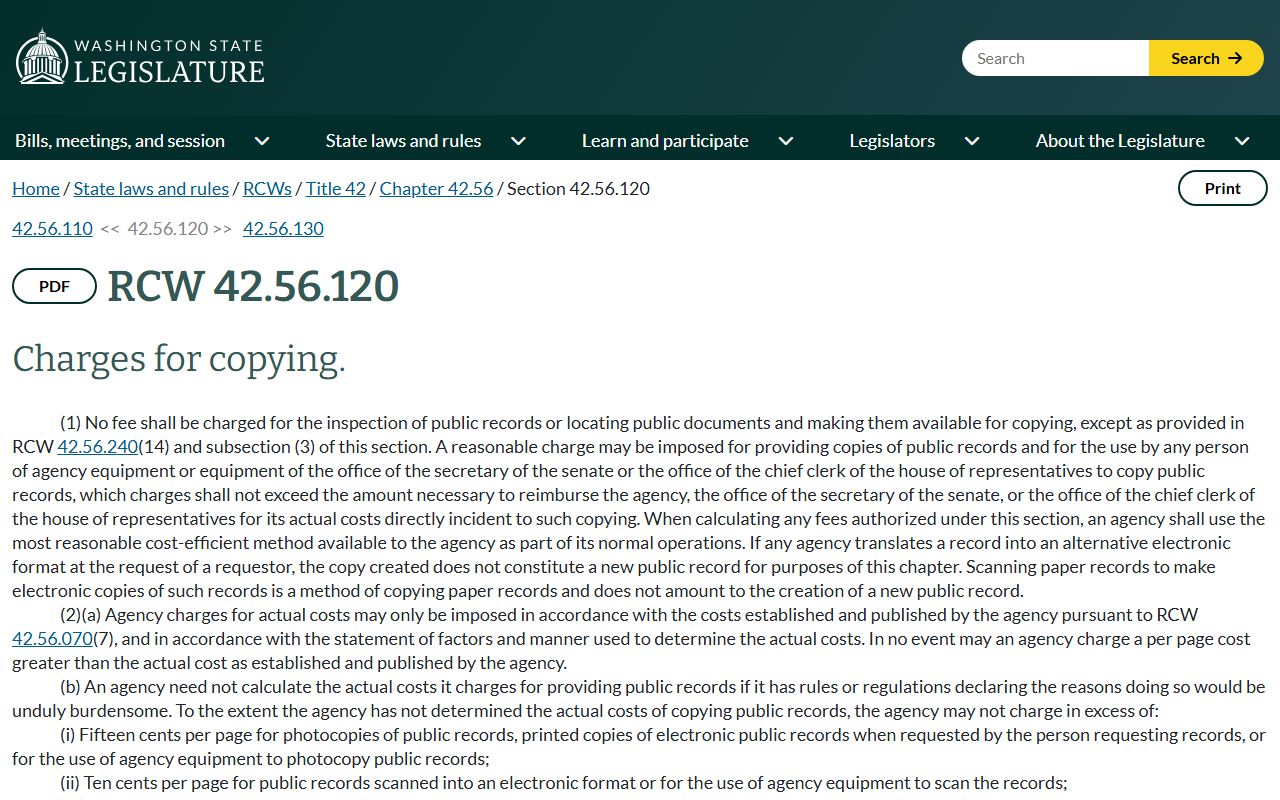
Agency copy charges are governed by RCW 42.56.120, which controls charges and alternative fee methods for PRA requests.
Denials and Judicial Review
The PRA gives requesters a remedy when an agency says no. If an agency denies access, gives an unreasonable time estimate, or fails to comply, the requester can ask a court to review the decision. The court can order the records released and, in some cases, impose penalties on the agency.
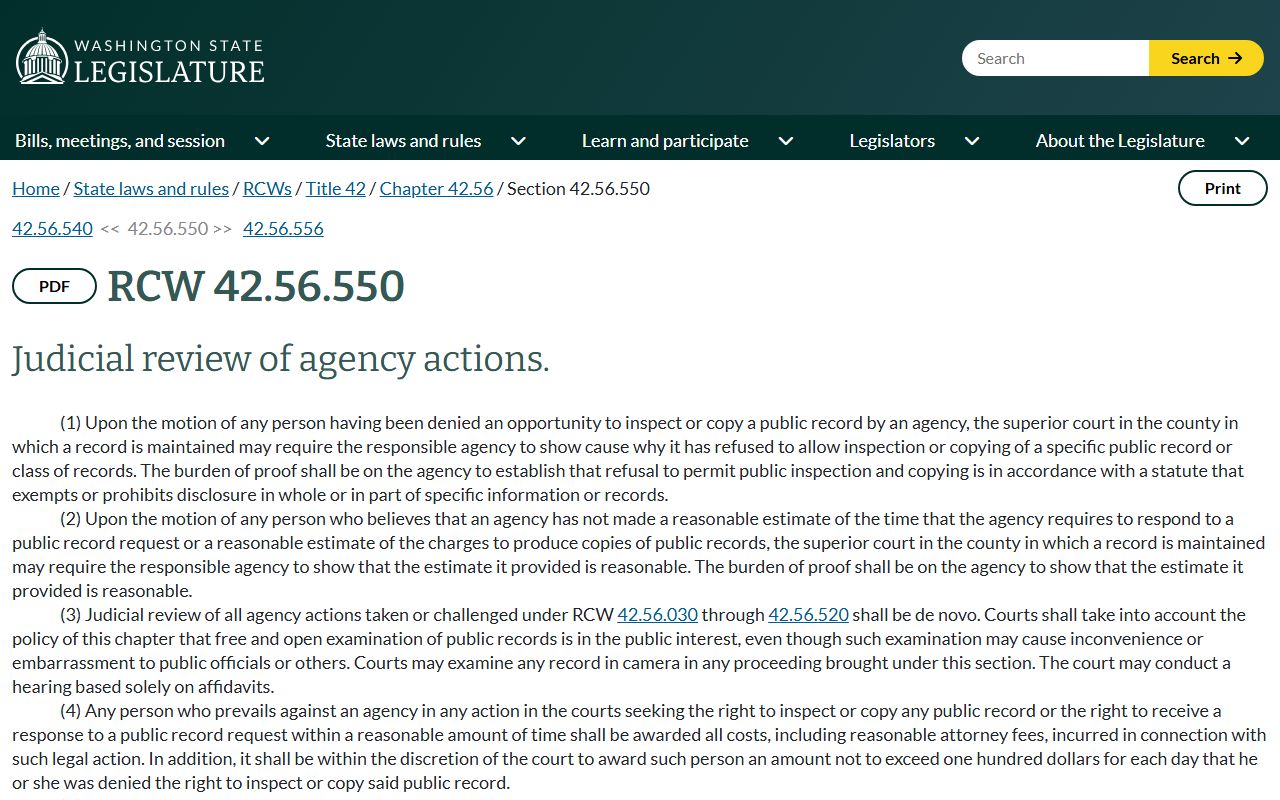
The review process is set in RCW 42.56.550, the judicial review provision for public-record denials.
In practice, most requests do not reach court. An agency usually responds within a few business days with the records, a time estimate for a larger search, or a clear explanation of any exemption it claims. If a response seems slow, a polite follow-up that references the original request and its date often moves things along. The court remedy exists for the cases where an agency does not comply, and the possibility of penalties is what gives the law its teeth.
Recorder's Office Documents
Some of the most requested public records are recorded documents, and those are not court files. The Recorder's Office records and copies real-property documents, liens, military separations, marriage records, and other recorded instruments. These are public and searchable through the Recorder, separate from the Clerk's court files.
A deed, a lien release, or a marriage certificate comes from the Recorder. A court order or judgment comes from the Clerk. The Recorder's Office page covers recorded documents, and the marriage and divorce records page covers marriage copies. The county also runs a central records and requests hub that helps route inquiries to the court, the Recorder, the archives, or the public-records process, which is useful when you are not sure which office holds what you need. Starting at that hub can be faster than guessing, especially for older records that may have moved to the county archives.
Privacy Exemptions and Open-Access Policy
Openness is the default, but it has limits. The PRA directs that the law be read broadly to favor access and that exemptions be read narrowly. Even so, some information is exempt or restricted, such as certain personal identifiers, investigative material, and records protected by other statutes. Sealed court records and confidential case types are restricted under court rule, not the PRA.
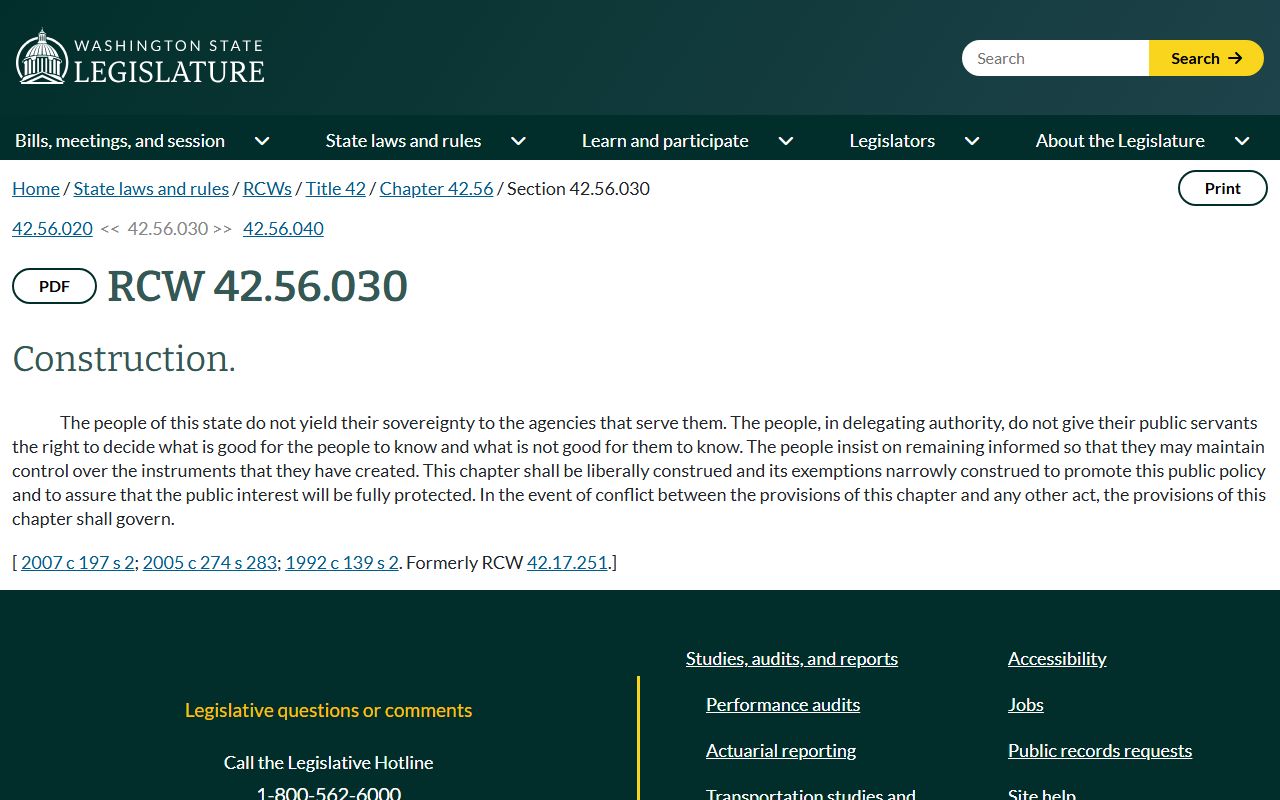
The open-access policy is stated in RCW 42.56.030, which calls for liberal construction in favor of disclosure.
Note: A public-records request to a county agency is not the same as a court-record request; court files go to the Clerk, while agency records follow the Public Records Act.
Administrative Court Records
There is a third category many people miss. Beyond case files and agency records, courts keep administrative records about how they run, such as budgets, policies, and management documents. These are not part of any one case. Access to administrative court records is governed by court rule GR 31.1, which is separate from the GR 31 rule for case files and from the Public Records Act for agency records.
King County Superior Court has its own guidance for administrative-record requests under that rule. So if you want a court's internal administrative document rather than a case file or a department's records, you use the court's administrative-record process. The distinction sounds technical, but it routes the request to the right place and explains why a court may handle an administrative request differently from a case-file request. The court records page covers case-file access, which is the more common need.