
King County Probate Venue
Probate in King County is handled by Superior Court, specifically the Ex Parte and Probate Department, and the records are held by the Superior Court Clerk. Because there is no standalone probate court, you do not look for a separate office. You use the Superior Court system. KC Script includes a Probate and Guardianship search as Case Type 4, plus a separate Will Repository search.
The probate department handles estates, guardianships, conservatorships, trusts, and related filings. The same Clerk that holds felony and family files holds probate files, which keeps the search path consistent with other Superior Court records. Because probate runs through Superior Court rather than a separate court, the rules for searching, copying, and certifying probate documents match the rules for any other Superior Court case. That consistency is helpful: once you know how to search KC Script for one case type, you know how to search it for probate.
Superior Court Ex Parte & Probate
King County Courthouse
516 Third Avenue, Room 609
Seattle, WA 98104
206-296-9300
Mon-Fri 9:00 a.m. to 4:30 p.m.
What King County Probate Records Cover
Probate is the court process for settling what a person leaves behind, and the records reach further than many people expect. A probate file can include the will, the petition that opened the case, the order appointing a personal representative, the inventory of assets, creditor notices, and the final accounting that closes the estate. Guardianship and conservatorship files cover decisions made for a living person who cannot manage their own affairs or finances.
Because these files touch money, property, and family, they draw a wide range of searchers. Heirs check whether an estate has opened. Creditors check for a case to file a claim. Title companies check probate to clear property. Researchers and relatives look for older estates. The same KC Script search serves all of them, with the decedent's name as the usual starting point.
King County Probate and Guardianship Search Fields
The probate search uses the same KC Script case-search form as other Superior Court types. Choose Case Type 4, then search by the decedent or party name, or by a case number. Post-1979 cases use the XX-X-XXXXX-X format, and there is a separate field for older case numbers.
| Field Label | Type | Required | Notes / Format |
|---|---|---|---|
| Case Type | Dropdown | Yes | Choose 4 Probate/Guardianship |
| Case Number | Text | No | Post-1979 format XX-X-XXXXX-X |
| Pre-1979 Case Number | Text | No | For older cases |
| Filing Date | Date range | No | Presets and user-selected dates |
| Last / First / Middle Name | Text | No | Decedent or party name |
| Organization Name | Text | No | Fiduciary or entity party |
The probate search runs through the same King County court records portal used for all Superior Court case types.
King County Will Repository Search
The will repository is a separate tool. The Superior Court Clerk offers a safe place to deposit a will for safekeeping, and the repository search tells you whether a will has been given to the Clerk. It does not show the contents of the will or open a probate case. It only confirms whether a will is on deposit.
| Field Label | Type | Required | Notes / Format |
|---|---|---|---|
| Last / First / Middle Name | Text | No | Supports contains and soundex |
| Organization Name | Text | No | Entity search |
| Record # | Text | No | Repository record number |
| Filing Date | Date range | No | Presets and single-day options |
The live tool is the KC Script Will Repository search.
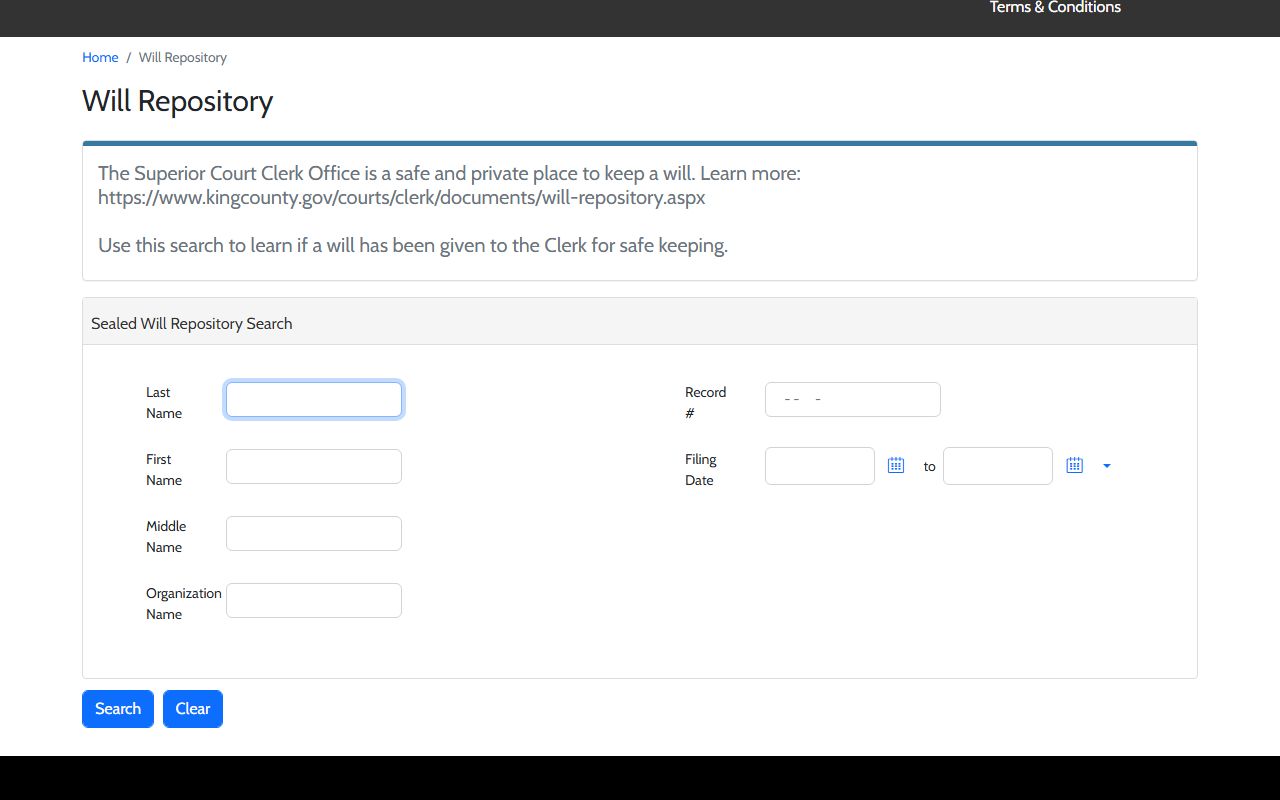
If a probate case has already opened, use the Probate and Guardianship search instead, since the repository search and a case search answer different questions.
Filing Wills and Opening Probate
Opening a probate has clear rules about original documents. Original wills and codicils for probate must be delivered or mailed to the Clerk. A copy of a will may be e-filed only if it is clearly marked as a copy, and an e-filed will that is not marked copy can be rejected. As of May 16, 2024, electronic wills that conform to Washington's Uniform Electronic Wills Act may be submitted electronically to the will repository.
- Decide whether a full probate is needed or a small estate affidavit will do.
- Search KC Script Probate and Guardianship to see if a case already exists.
- Submit the Petition to Probate through Clerk e-filing, which assigns a case number.
- Deliver or mail the original will and codicils with a probate cover sheet.
- Use the assigned case number on cover sheets and later filings.
- Request certified copies of letters or orders through KC Script when needed.
Probate of wills itself is governed by a state statute.
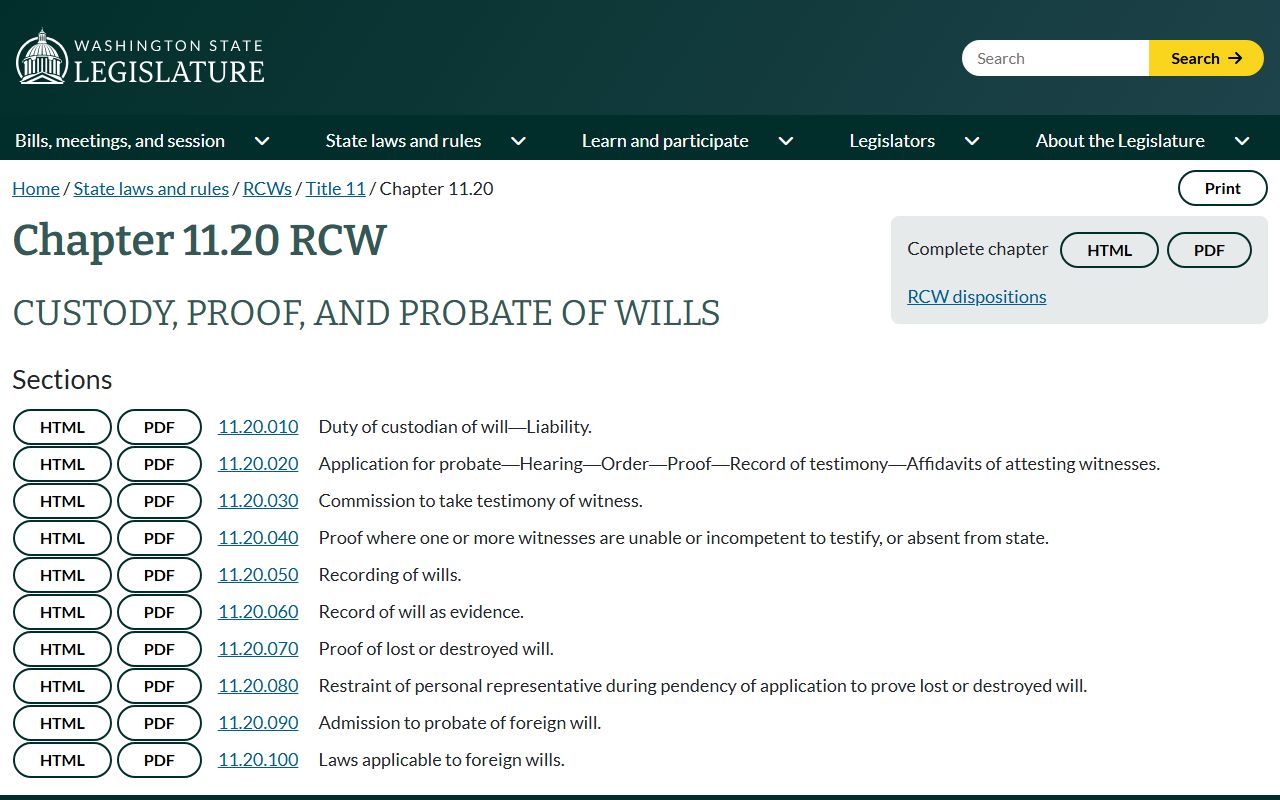
The rules sit in chapter 11.20 RCW, which governs the proof and probate of wills.
The probate cover sheet matters more than it looks. When filing a will or codicil, you attach the cover sheet, write the decedent's name in the upper-left box, and add the case number assigned at filing. You also mark whether the attached document is an original, a certified copy, an exemplified copy, or a plain copy. Getting this label right is what keeps an e-filed copy from being rejected, since the Clerk treats an unmarked electronic will as if it were an original that should have been delivered on paper.
Small Estate Affidavit
Not every estate needs a full probate. Washington allows a small estate affidavit to collect personal property when the estate value meets the statutory limit and other conditions are met. This avoids opening a court case for a modest estate, which saves time and filing cost. The affidavit process is set by statute, and it is worth checking before assuming a full probate is required.
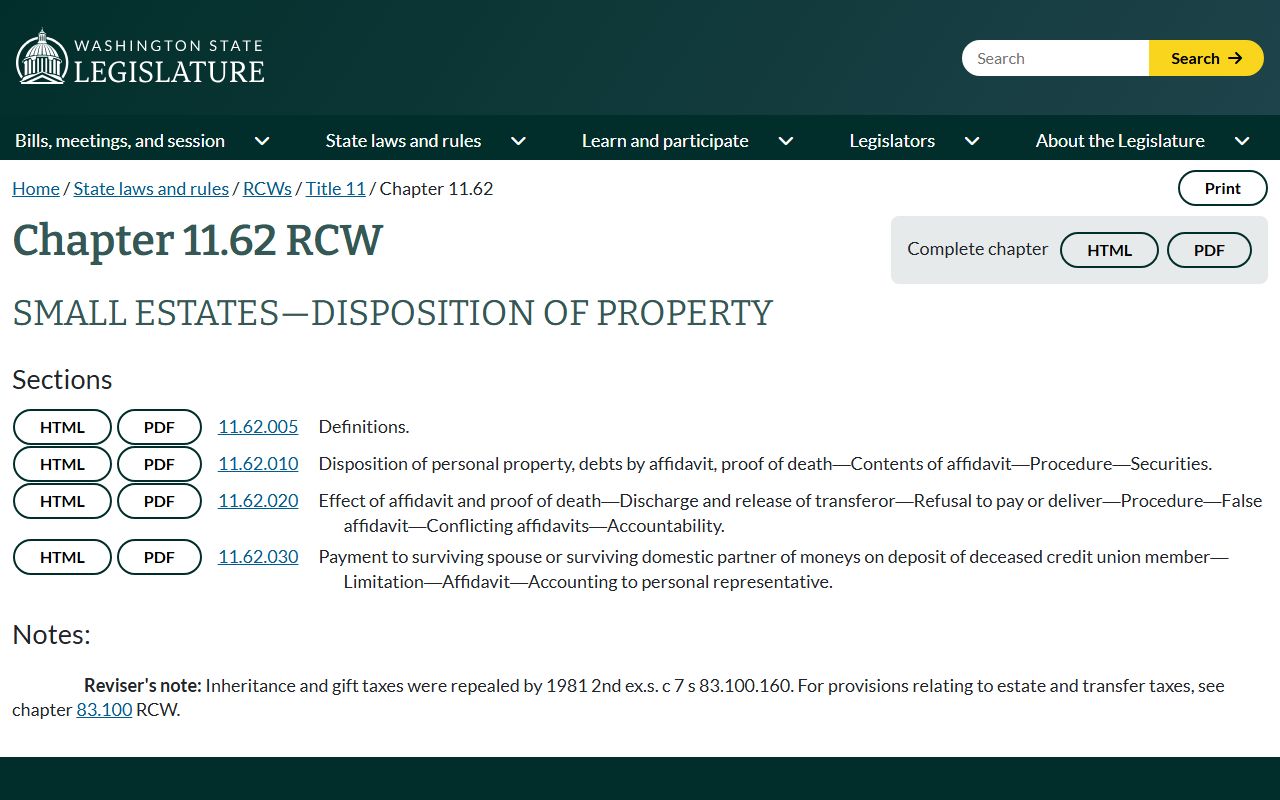
The affidavit rules are in chapter 11.62 RCW, the small estate affidavit procedures.
King County Probate Terms
Probate uses words that rarely come up elsewhere. A short glossary helps when you read a case or a filing.
- Testator
- The person who made the will.
- Executor
- The person named in a will to settle the estate.
- Intestate
- Dying without a valid will.
- Guardian
- A person appointed to make decisions for another person.
- Conservator
- A person appointed to manage another person's property or finances.
Guardianship and Restricted Data
Guardianship and conservatorship files can hold sensitive personal, medical, and financial details. Even when the docket is public, parts of the file may be restricted. Adoption records are a clear example of confidential records that connect to family and probate practice.
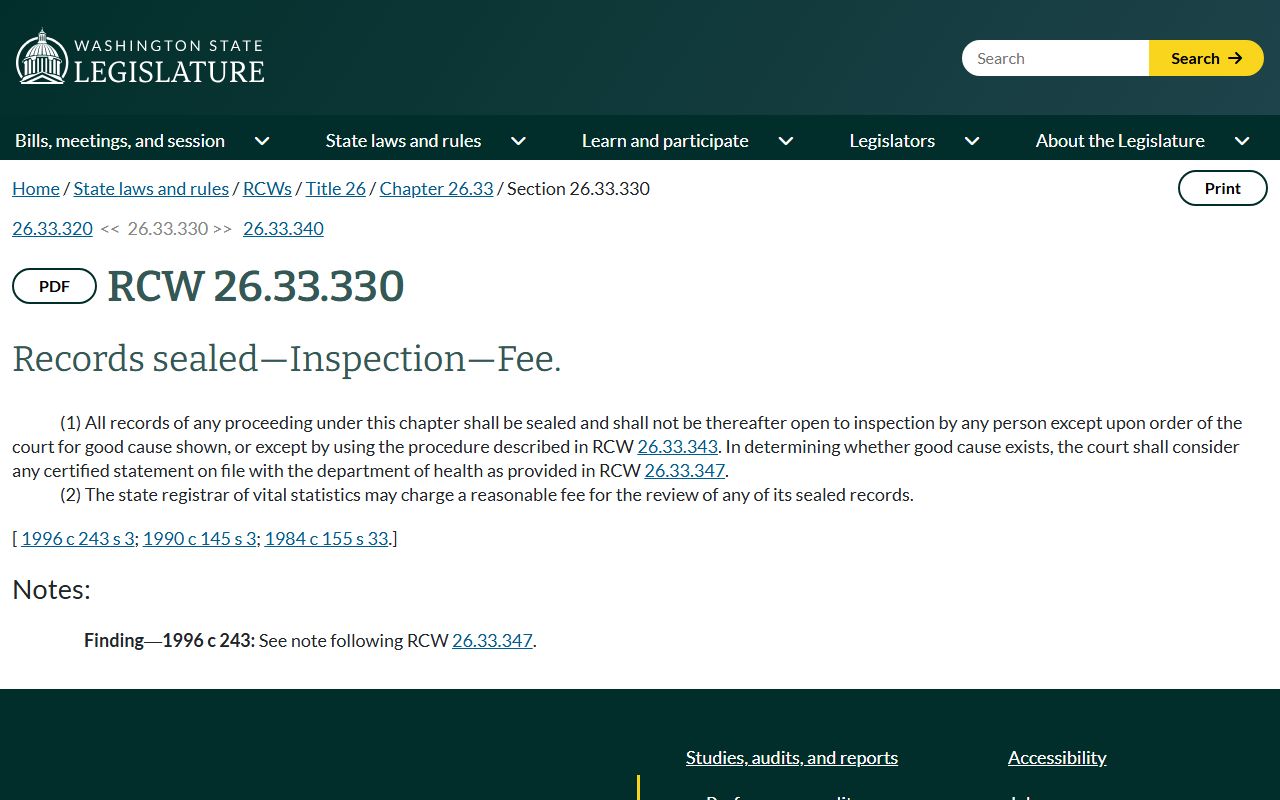
Adoption confidentiality is set by RCW 26.33.330. Sealed or confidential probate-related material may require eligibility and identity verification through the Clerk, the same process used for other sealed Superior Court records.
Certified Probate Copies and Fees
Copies of probate documents come from the Superior Court Clerk and follow the standard Clerk fee schedule. Letters testamentary, orders, and other filed documents can be ordered as certified copies for use in banks, title transfers, and other formal settings.
| Item | Amount |
|---|---|
| Online view or download per page | $0.25 |
| Clerk-assisted non-certified copy per page | $0.50 |
| Certified copy | $5 first page, $1 each additional |
| Exemplified copy | $9 first page, $1 each additional |
A fee waiver is available for people who qualify, which can matter in a long estate with many filings. Full request steps are on the Superior Court Clerk page, and for related family records see marriage and divorce records. Letters testamentary are among the most requested certified copies, since banks and title companies often demand them before releasing assets.
Probate Timeline Basics
A full probate runs in stages, and the docket reflects each one. After the petition is filed and a personal representative is appointed, the estate gives notice to creditors, gathers and values assets, pays valid debts and taxes, and finally distributes what remains to heirs or beneficiaries. Simple estates can close in a matter of months, while contested estates or those with complex assets take much longer.
The will repository fits at the very start. Depositing a will with the Clerk keeps the original safe and makes it easier to locate after a death, but it does not open a case. A probate begins only when someone files a petition. If you are checking whether an estate has been opened, search the Probate and Guardianship case type first, then use the repository search only to confirm whether a will was deposited. The court dockets page explains how to read the case events once a probate opens.
Note: The will repository search only shows whether a will was deposited for safekeeping; it does not open a probate or reveal the will's contents.