
How to Find King County Arrest Records
The fastest path to a recent arrest is the jail roster. King County's Department of Adult and Juvenile Detention runs a free Subject Lookup Tool that shows adults currently in custody and adults booked within the past year. It returns the person's name, facility, arresting agency, booking number, and booking date. The booking number, also called a B/A number for Book of Arrest, is what you need to send money or contact someone in custody.
Arrest records and court records are not the same thing. The jail tool covers custody and booking. It does not give court dates or case outcomes. For those, you move to the court that handles the charge.
- Open the DAJD Subject Lookup Tool.
- Search by last name, first name, or booking number.
- Filter by facility or custody status to narrow results.
- Note the booking number and arresting agency.
- Move to the right court portal to track the charge and case.
Full roster detail, including the search fields and facility contacts, sits on the King County inmate records page.
What King County Booking Records Show
A booking record is a snapshot of custody, not a case file. When you open a result in the county jail tool, you see a small set of fields drawn from the booking. The table lists what appears on the public roster.
| Field | What It Shows |
|---|---|
| UCN | A unique control or person number for the individual |
| Name | The person's full name, usually in uppercase |
| Facility | King County Correctional Facility, Maleng Regional Justice Center, or another listed site |
| Arresting Agency | The department that made the booking |
| Booking Number | The B/A number in YYYY-NNNNN format |
| Booking Date | When the person was booked into custody |
The roster does not list charges, court dates, or release dates. It is a custody snapshot, useful for confirming that a booking happened and for getting the booking number, but it stops there. The county is clear that detention staff do not have court-case information, so a charge or hearing has to be tracked in the court portal, not the jail tool.
Arrest Record vs Criminal Court Record
These two records answer different questions. An arrest record shows that a person was taken into custody. A criminal court record shows what the court did with the charge. One can exist without the other, since not every arrest leads to a filed case and not every charge starts with a jail booking.
| Arrest Record | Criminal Court Record |
|---|---|
| Created at jail booking | Created when a prosecutor files charges |
| Held by DAJD or the arresting agency | Held by Superior Court or District Court |
| Shows custody, facility, and booking number | Shows charges, hearings, and disposition |
| Searched through the jail lookup tool | Searched through KC Script or District Court Access |
Use both together. The jail tool tells you someone was booked, and the court portal tells you what happened next.
Felony and Misdemeanor Criminal Records in King County
Once a case is charged, the criminal court record depends on the level of the offense. Felonies are prosecuted in King County Superior Court, and you search them in KC Script as Criminal Case Type 1. Misdemeanors and gross misdemeanors are handled in King County District Court or a city municipal court, and you search them in the District Court Case Access portal.
The King County Prosecuting Attorney charges all felonies countywide and misdemeanors in unincorporated areas. City misdemeanors in Seattle and other cities go to separate city attorney offices and may appear in a municipal court instead. Federal crimes are different again and are prosecuted by the U.S. Attorney.
The U.S. Attorney for the Western District of Washington, shown above, handles federal prosecutions tied to the county. For the full court search process, see court records.
Charges vs Convictions
A charge is only an accusation. A conviction is a finding or plea of guilt. Reading a criminal record, the difference is everything, because a charge can be dismissed, reduced, or dropped without ever becoming a conviction. Treat a charge as the start of a case, not the result.
| Charge | Conviction |
|---|---|
| An accusation filed by the prosecutor | A guilty finding, plea, or verdict |
| May be dismissed or reduced | Carries a sentence or penalty |
| Shown as a pending or open case | Shown as a disposition in the record |
The Washington Criminal Records Privacy Act treats nonconviction data with extra care, which is covered next.
Mugshots and What Is Public
The jail lookup tool does not display mugshots on its search-results screen. Booking photos may exist in agency files, but they are not part of the public roster results. Court portals also hold back personal identifiers. District Court does not publish addresses, phone numbers, or dates of birth, and GR 31 requires parties to redact personal identifiers in filed documents.
Booking rows in the county tool do show the arresting agency, which can be Seattle Police, the King County Sheriff's Office, Federal Way Police, Kirkland Police, or another department. That detail tells you which agency to contact for an arrest report, since the report itself is an agency record, not a court file.
Washington Criminal Records Privacy Act
Criminal history in Washington is governed by the Criminal Records Privacy Act in chapter 10.97 RCW. The chapter controls how criminal history record information is shared and corrected, and it treats conviction and nonconviction data differently. This is the law behind the Washington State Patrol WATCH background-check system and the rules on releasing nonconviction information.
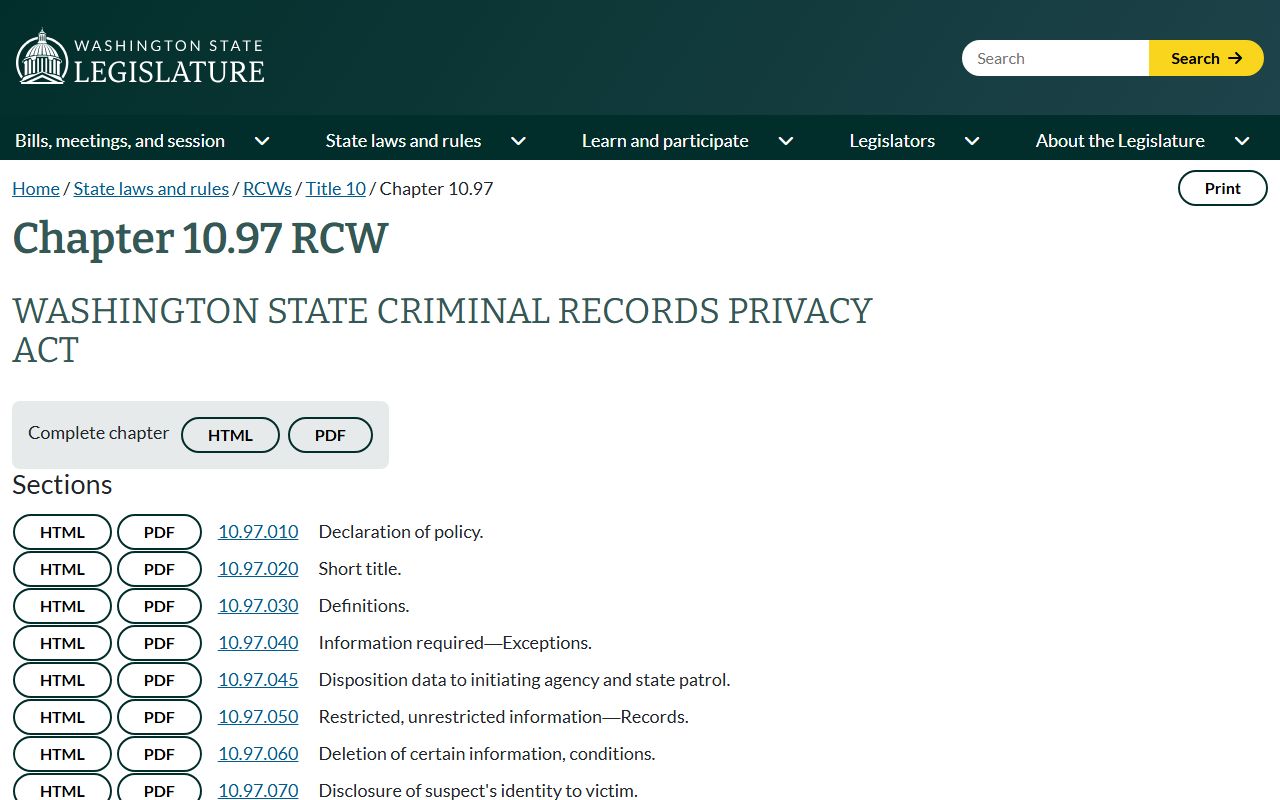
You can read the chapter through the Washington Criminal Records Privacy Act. It matters most when you request a formal criminal-history report rather than a single court case.
For a full background check, a single county court search is not enough. A statewide criminal history pulls from many courts and agencies, and it follows the dissemination rules in chapter 10.97 RCW. Conviction data is generally available, while nonconviction data carries limits on how long and to whom it can be released. A King County arrest record alone does not prove guilt, and an employer or landlord must follow both state law and the federal Fair Credit Reporting Act when using criminal history. For records that cross county lines, a statewide search is the better tool than a single local portal.
Sealed, Vacated, and Expunged Records
Washington uses court-rule sealing and statutory vacation, and the two are not the same. Sealing under GR 15 restricts public access to a court record after a judge makes findings. Vacating a conviction is a statutory process that changes how a conviction is treated and reported. A vacated conviction is not erased from every system, but it changes the legal answer to whether a person stands convicted.
| Sealed Record | Vacated or Expunged Conviction |
|---|---|
| Public access is restricted by court order | The conviction is set aside under statute |
| Governed by court rule GR 15 | Governed by RCW 9.94A.640 or RCW 9.96.060 |
| The file still exists but is hidden | The person may state they were not convicted |
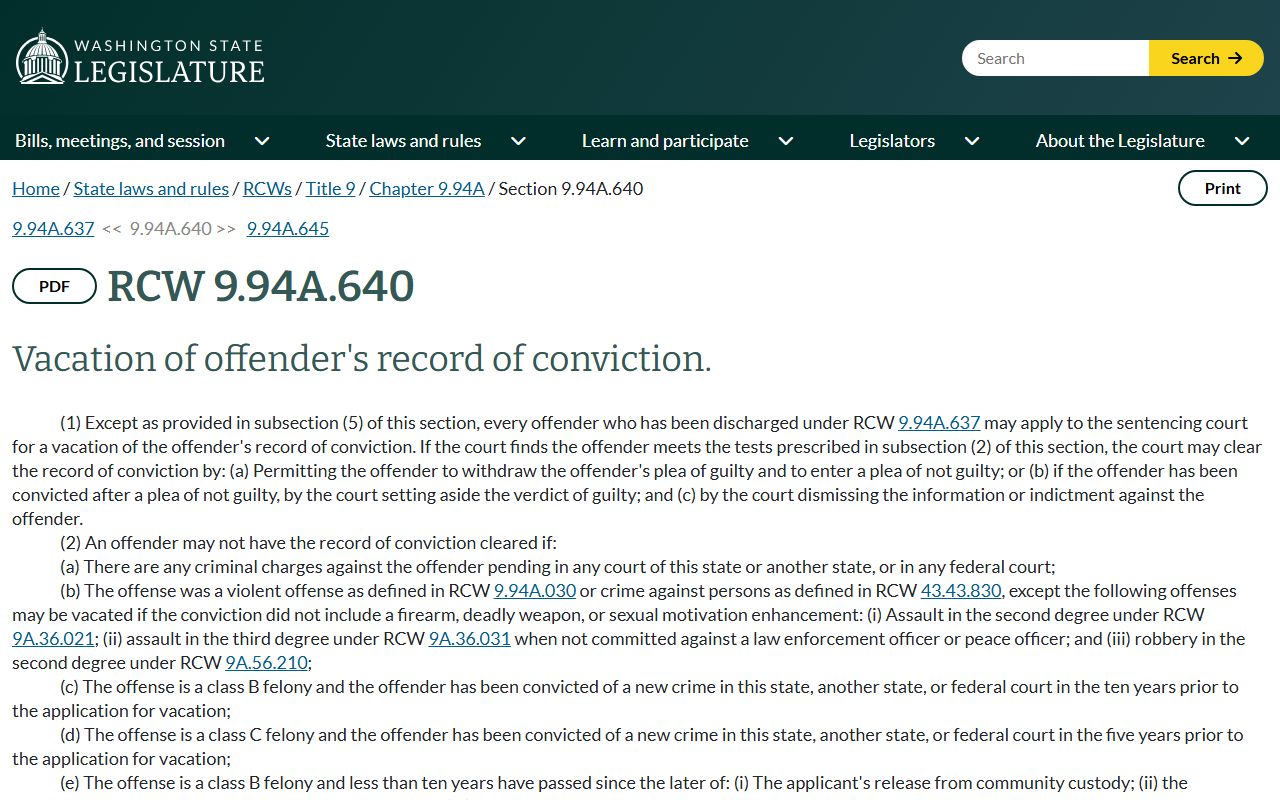
Felony vacation follows RCW 9.94A.640, which lets qualifying felony convictions be vacated after statutory conditions are met.
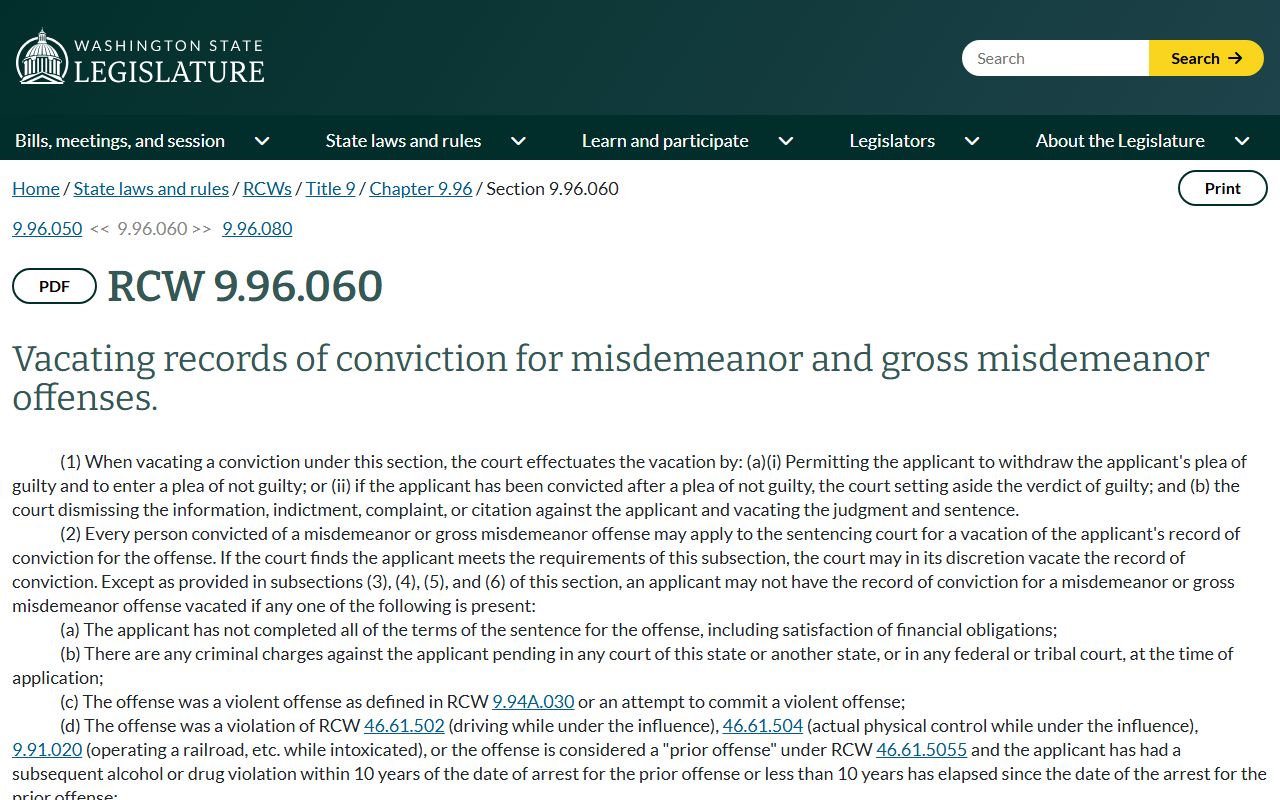
Misdemeanor and gross-misdemeanor vacation follows RCW 9.96.060, which sets eligibility and procedure for many misdemeanor convictions.
Both routes interact with criminal-history rules, so a vacated case may still appear in some systems even after relief.
Restricted Juvenile Criminal Records
Juvenile records are more protected than adult records. Juvenile offender records and sealing follow RCW 13.50.260, and juvenile dependency records are confidential under RCW 13.50.100. KC Script has a Juvenile Offender Search category, but access depends on eligibility, and sealed juvenile cases may not be confirmable in public search at all. If a youth under 18 is in custody, the county directs callers to a separate 24-hour youth line rather than the adult roster. Confidential name changes under RCW 4.24.130 add another layer, since a person with a safety concern may have a sealed name-change order that keeps an old name out of public view. The goal of these rules is to protect young people and vulnerable parties, so a clean public search does not always mean no record exists. When juvenile history is relevant to a legal matter, an attorney can ask the court whether sealed material can be reviewed. Juvenile dependency records are restricted by statute.
Prosecutor, Defense, and Legal Help
Two offices anchor the criminal system. The King County Prosecuting Attorney represents the state in criminal cases. The King County Department of Public Defense represents financially eligible defendants by court appointment. People do not simply choose public defense; the court appoints it after a financial screening. For other help, free clinics and referrals are available.
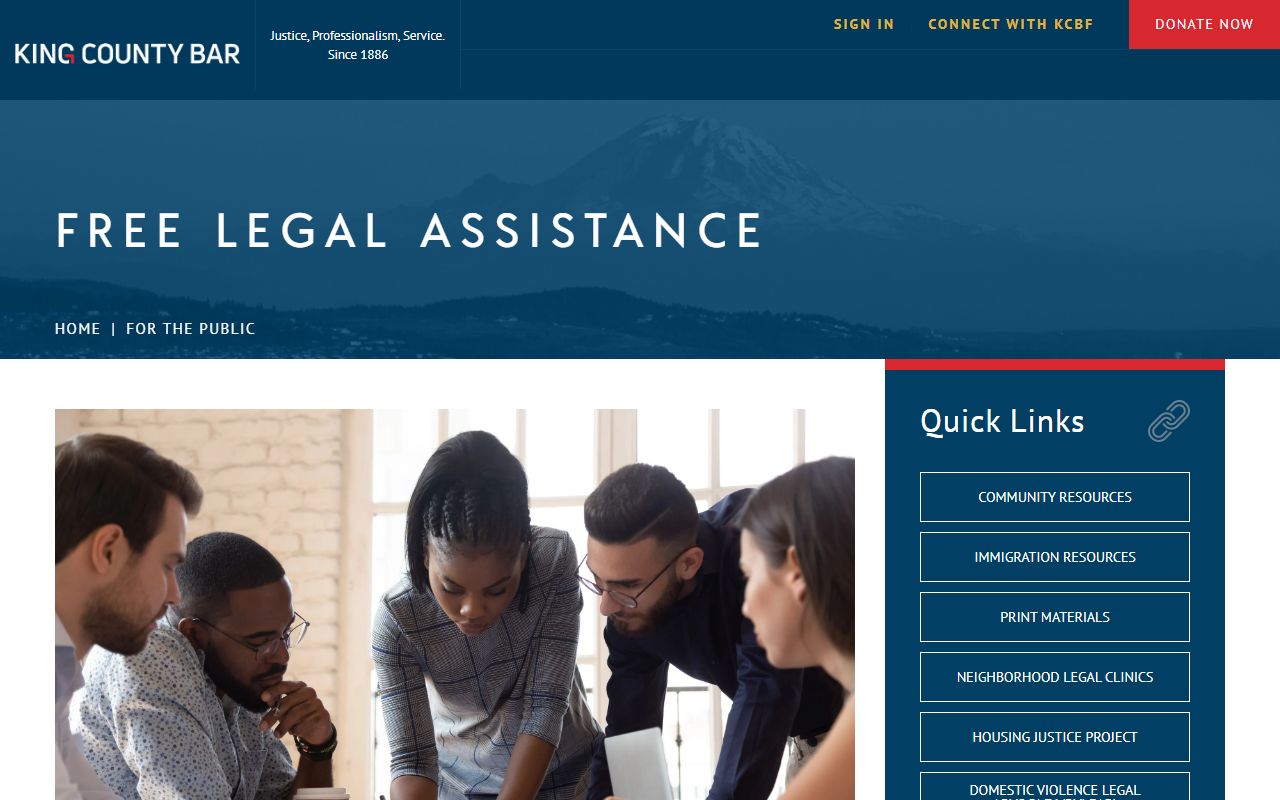
The King County Bar Association free legal assistance page lists clinics and referral options. For warrant questions tied to a criminal case, see the warrant records page, and for traffic-related criminal matters such as DUI, see traffic court records.
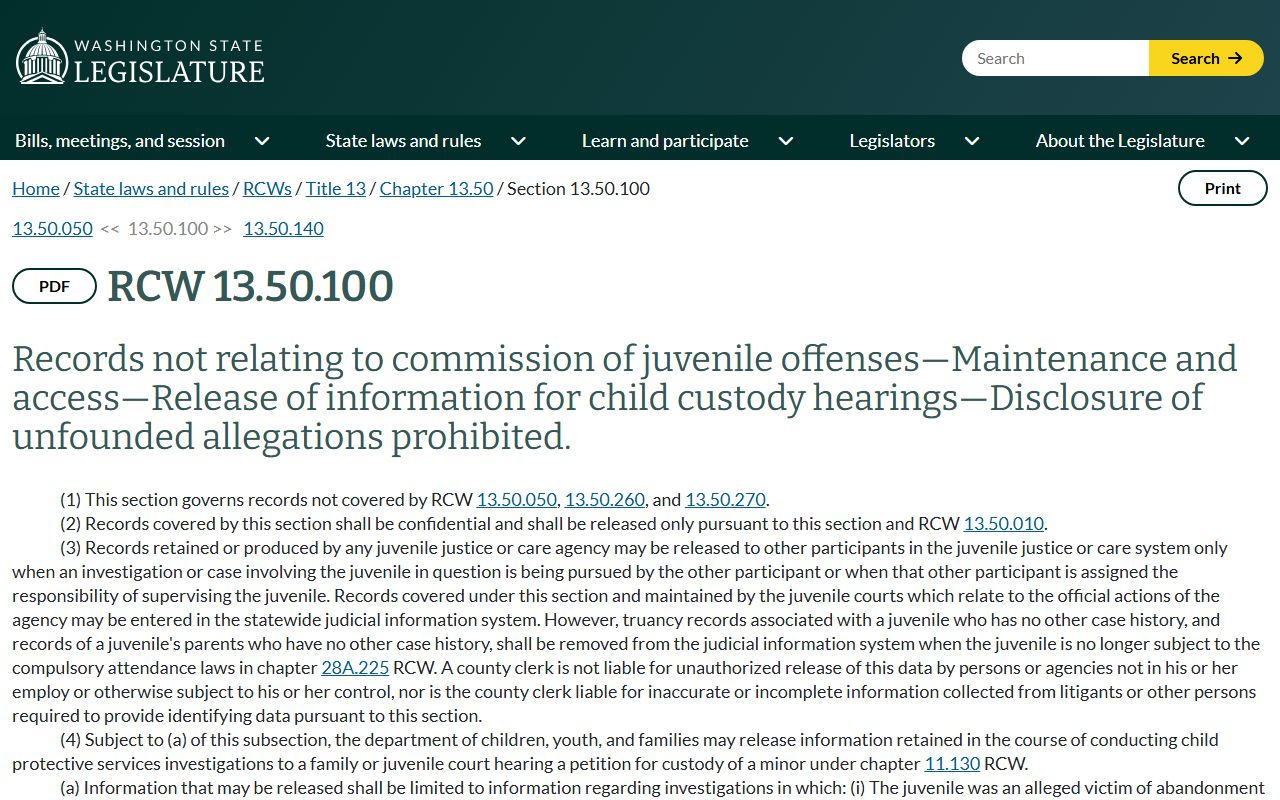
Juvenile dependency confidentiality is set by RCW 13.50.100, while juvenile offender sealing follows a separate statute.
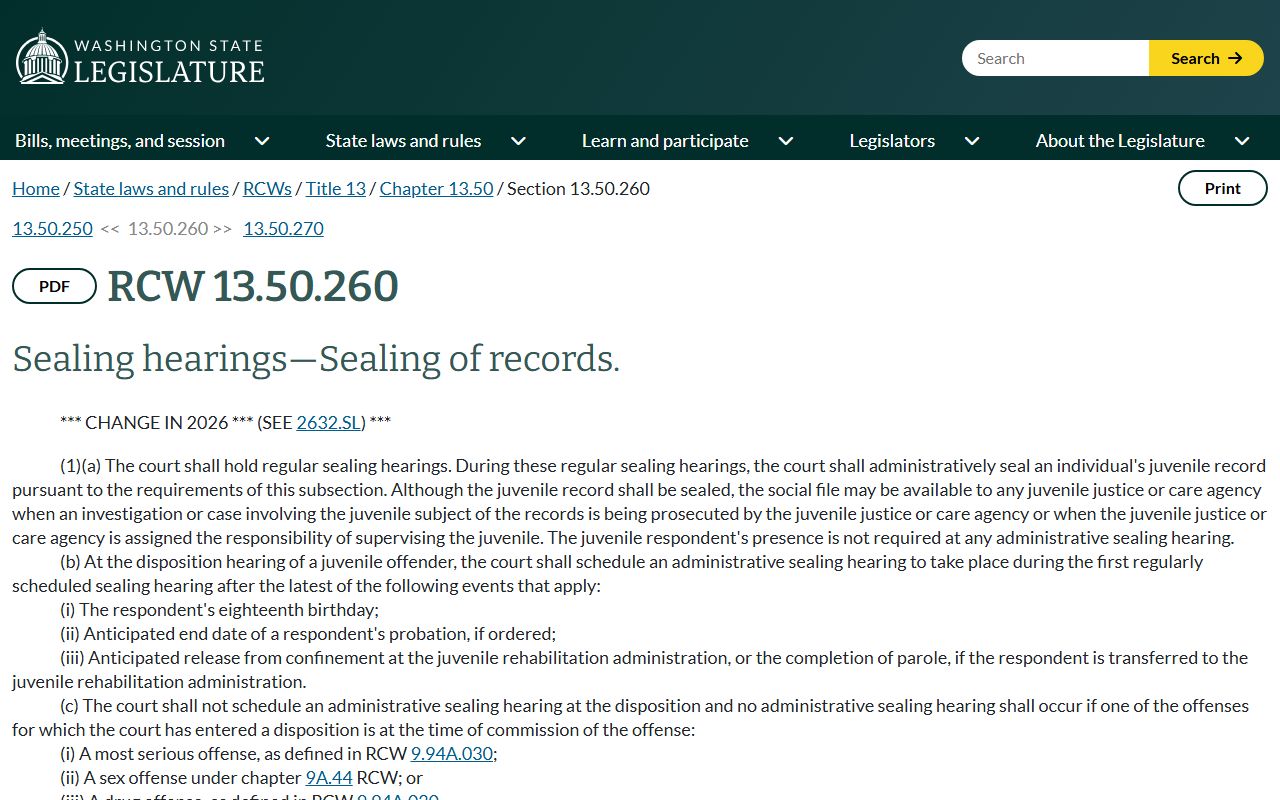
Juvenile offender record sealing is governed by RCW 13.50.260, which sets eligibility based on offense, restitution, and waiting periods.
Note: An arrest is not a conviction, and online data can lag, so confirm any criminal record with the court or agency before relying on it.